The CIA in Your Brain

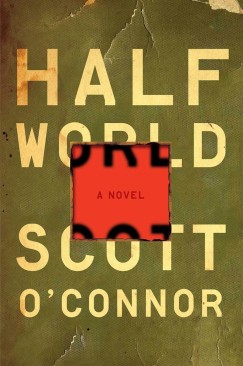
half-world-243x366From the early 1950s to the early 1970s, the CIA ran a mind control program that included hiring prostitutes to lure johns into “safe houses” where government agents imprisoned and drugged the johns to see if they could brainwash them.  LSD was their drug of choice.

It’s crazy to think about.  It’s also a fairly well-known part of Cold War American history.  The program was called MKULTRA.  If you want to fall into a rabbit hole, do a web search of it.

I don’t really want to fall into that rabbit hole or send you there.  I only bring it up because I recently read and reviewed a novel that was set against the backdrop of MKULTRA: Scott O’Connor’s Half World.  My review posted on the main page of the Los Angeles Review of Books today.

One of my favorite things about the LA Review of Books–both as a reader of it and as a contributor–is the freedom they allow their reviewers.  Reviews blend into essay territory, covering not only the book in question but the larger issues surrounding the book’s ideas.  I like that, in a world where books seem to be viewed more and more as commodities, LA Review of Books treats them as they should be: a place for ideas to be nurtured, to flourish.

Anyway, before I wander off to far on that tangent, I’m going to give the link to my review, then get on with my day.

A Summer of Reading Women

Over this past summer, I decided to read only books by women.  It started out unintentional and grew into it’s own little obstinate exercise.  I did this, in part, to celebrate a little freedom.  For the first time in years, I didn’t have to do any specific academic project over the summer.  So much of my last several years have been focused on earning a doctorate and engaging in exhausting scholarship and writing novels and short stories whenever I could squeeze out a few minutes.  But this past summer, my new novel came out, my Ph.D. was well in hand, I’d been hired into a great new position at my university, and I was free to relax a little.  So I decided to kick back with a bunch of books that I didn’t plan on doing scholarship on or teaching or anything.  I wanted to just read for pleasure.  Part of me figured that books by women were as good as books by men.  Since I’d started the summer with women authors, I’d follow the trend.

There were deeper reasons why I did this, too.  I detailed most of them in my latest column for Razorcake.  I don’t want to repeat myself here.  Plus, I’d like it if more people supported the magazine.  So, if you’re interested in checking out the whole experience, please consider picking up the new issue (#77).  I know it costs a whopping five dollars.  I’m still going to make you pay that if you want to read the column.

As far as this post goes, I’m going to list three of my favorite reads from the summer.  I recommend all of them highly.  They’re probably available at your local library or at independent and/or online booksellers that aren’t named after a piranha-infested South American river.

burymedeepBury Me Deep by Megan Abbott
I first heard of Megan Abbott through some scholarship she’d done on Philip Marlowe and the noir novel.  From there, I found out she was a novelist, too.  So I’d checked out Queenpin, which is kind of like Miller’s Crossing with a female cast.  If you know how much I love Miller’s Crossing (short answer: a lot), you know this is high praise.  After Queenpin, I was open to reading anything by Abbott.  I picked up a copy of Bury Me Deep from Bookman’s in Flagstaff.  The novel is set in Phoenix in the early 1930s.  It tells a story of murder, lust, and manipulation. Bodies end up in luggage at a train station.  If I say any more, I give too much away.

gettingmothersbodyGetting Mother’s Body by Suzan Lori-Parks
A colleague of mine taught a course on Suzan Lori-Parks.  I felt bad that I didn’t know who she was.  When I saw this book at the library bookstore for a buck, I couldn’t pass it up.  Getting Mother’s Body is a rewriting of Faulkner’s As I Lay Dying from the perspective of a dirt-poor, pregnant African American girl.  I’d imagine it’s a good book even if you haven’t read the Faulkner.  It’s fast-paced and beautifully written.  I fell in love with the characters.  When I finished reading and thought about the book in comparison to As I Lay Dying, what Lori-Parks chose to change, the dialogue she seemed to be having with another novel, I started to realize just how brilliant Getting Mother’s Body is.

 the-accidentalThe Accidental by Ali Smith
This was my book of the summer.  I wrote a review of it for Flagstaff Live.  The link to the article seems to be dead, so I re-posted it on this blog here.

I’ll probably follow up with a few more of my favorite books by women authors in another post.  This should be enough to chew on for now.

The Accidental

smith_accidentalMy new favorite writer is a contemporary Scot named Ali Smith.  I read four of her books over the last couple of months, then made myself take a break.  Now I’m having Ali Smith withdrawals.

It’s fitting for the title, but I came across The Accidental accidentally.   My latest contribution to the Words That Work column in Flagstaff Live tells the whole story.  The link seems to be dead, so I’ll include the text of the review below.

The Accidental by Ali Smith

I usually have an internal compass that directs me to independent bookstores in unfamiliar cities.  It leads me to neighborhoods where I can find pizza by the slice, art house theaters, mom-and-pop coffee shops, cafés with vegetables on the menu, and pubs that serve local beers.

For some reason, my compass was off while I was in Edinburgh.  I found pizza by the slice.  I found pubs and independent coffee shops and even a vegan restaurant in the basement of an eighteenth-century church.  But I could not find an independent bookstore.

The situation was serious.  I had a twelve hour flight the next morning.

The only bookstore I could find was Waterstones, which is a giant UK chain.  I wasn’t ruling out Waterstones completely.  Since they carried almost the exact same books I’d find at the Barnes & Noble on Milton, I made them my last resort.  I was looking for something more in line with Starrlight: a place where I could stumble across something new, something local, something unique.

After a few hours of circling the city, I passed a park full of tents.  Edinburgh was alive with festivals that weekend.  I figured I’d check out every one I stumbled across.  I wandered to the front of the park only to find that the tents belonged to the Edinburgh International Book Festival.  What luck!

Even luckier: that’s where I discovered Ali Smith.

Among the racks of books for sale was one dedicated to Scottish authors.  Down on the bottom were a row of books with funny titles like Other Stories and Other Stories and There But For The.  I picked one called The Accidental.  Or, to perhaps describe the feeling more accurately, it picked me.

The Accidental begins, “My mother began me one evening in 1968 on a table in the café of the town’s only cinema.”  It immediately launches into an awkward sex scene between two strangers that will lead to the narrator’s mother’s “nylons rolled in a warm ball in her coat pocket.”  After describing the moment of conception, the narrator introduces herself:

Hello.

I am Alhambra, named for the place of my conception.  Believe me.  Everything is meant.

The Alhambra of the novel is in her mid-thirties.  She becomes entangled with the Smart family, who take her into their Norfolk summer home.  The Smarts are fairly well-heeled.  Eve Smart is an author who has recently gained commercial success.  Michael Smart is a professor at a prestigious London university.  The Smart children, Astrid and Magnus, are on their way to their own cushy lives.  Just below the surface of this picturesque life lives each of the Smart family secrets.  Alhambra reveals them all in time.

Throughout the book, I was never really sure what Alhambra’s motives were or why she was putting up with the Smarts.  The Smarts all seemed to come alive as a result of her presence, but she seemed only moderately annoyed with them.  I had the feeling that she was, in some way, a con woman.  I couldn’t figure her angle, though.

On the larger level, The Accidental seems like a con.  The writing is so smooth.  The events move at the speed of a slight-of-hand trick.  I tried to find the red queen within the Three-Card Monte, but it was forever illusive.  And when the trick was revealed at the end, it felt like a light bulb exploded in the back of my head.  Reading The Accidental felt like the first time I read Mark Twain’s “The Celebrated Jumping Frog of Calaveras County”:  I knew the author was toying with me, but the game was so fun, both for me and him, that I willingly went along.

Now, I’m hesitant to tell Americans about Ali Smith.  I feel like she’s a hidden literary gem.  She’s all mine, right now, a personal pleasure that I don’t have to share with anyone because no one is talking about her.  At least not here.  In Scotland, she’s a major talent.  Here in the States, she’s an explosion waiting to happen.  We can read her without the taint of a bandwagon.  But we have to do it soon.  The bandwagon’s surely coming.

Bleeding Edge

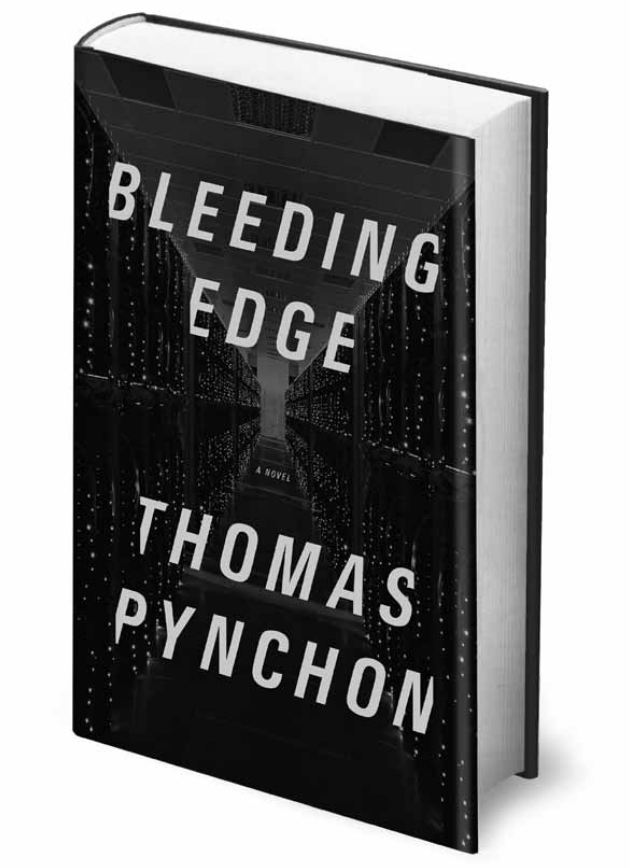
Bleeding_EdgeToday is the official release date for Thomas Pynchon’s new novel, Bleeding Edge.  You’d think I’d be excited about that.  After all, I wrote a book about Pynchon.  I’ve taught a couple of classes that focused solely on his works.  I’ve published articles on him in academic journals.  I play ukulele with him whenever I’m in New York.  So of course I must be excited, right?

Actually, I was more excited about it two weeks ago, when I drove down to LA to meet up with David Kipen in Hancock Park, between the Page Museum and the Tar Pits.  David passed an advance copy along to me as if the book were contraband.  So, of course, I’ve already read it.  I’ve already written about it, too.  If you’re interested in checking out my review of Bleeding Edge, you can read it on The Nervous Breakdown.

Warlock

Warlock_3

I write a column for the Flagstaff, Arizona weekly Flag Live.  It’s called Words That Work.  I split the writing duties with poets James Jay and Mark Gibbons.  This means that I only have to write my contribution once every three months.  The other two months, I get to dig what James and Mark have to say.

The latest installment is about Oakley Hall’s book Warlock You can read the column here.  Hopefully, it’ll convince you to read the book.  It’s one of my favorites.

England

London BridgeI’m in England right now for International Pynchon Week.  Because, strange as it sounds (to me, at least), I’m a scholar of the author Thomas Pynchon.  I’m presenting a paper today on Thomas Pynchon and his ukulele.  Don’t laugh at me.  The ukulele has revolutionary possibilities in Pynchon’s novels.

On second thought, it’s okay to laugh at me.

Anyway, this is my first time in England.  I’m way up here in the north, but I’m hoping to go down to London to see the London Bridge.  I hope it’s as pretty in real life as it is in the picture above.  I hope it hasn’t fallen down.  Seems like it’s been falling down since I was kid singing about that.

Best L.A. Novel Ever

for love of imabelleFor the past several months, I’ve been sucked into the L.A. Weekly‘s “Best L.A. Novel Ever” tournament.  They started with thirty-two books.  I’d read almost half of them previously.  I’d seen the movies for four or five more.  I’d taught a half dozen of the books, at least.

The tournament divided the novels into four regions.  Not surprisingly, I was most familiar with the novels in the “Noir” and “Rebels & Outcasts” regions.  I was almost completely ignorant of the “Hollywood” region.  I guess my reading matches my L.A. experiences.

Novels went head-to-head and worked their way through the brackets.  I didn’t want to talk about this contest to anyone until I found out who won.  Now that I know, I’ll throw in my two cents’ worth.

If you want to read the whole competition without knowing who wins, stop reading my blog post now and go the the contest link at the L.A. Weekly.

First off, any “best novel ever” competition is inherently flawed.  We all know that.  Novels are subjective beasts.  They depend on your personal tastes, where you are in your life when you read them, how much you can or can’t relate to the world of the novel, how the novel speaks to you, etc.  Our relationships with novels are intimate and personal.  Saying a novel is “the best” is like saying your kid is the cutest.

Second off, it’s fucking awesome that Chester Himes won it all.  I’ve been trying to push Himes on people for years.  I love his Harlem crime novels with Coffin Ed Johnson and Digger Jones.  Rage in Harlem is in my top three crime novels of all time.  I’m not even sure what the other two in the top three would be.*

Himes’s Harlem novels inspired my writing of Train Wreck Girl.  Himes has the ability to draw me into a world completely foreign to me, teach me the lingo, and make me feel like an insider.  Though I’ve never been to the Harlem that Himes writes about, I feel like his novels bring me inside.  I wanted to capture working class Florida, and particularly the neighborhood in Cocoa Beach where I lived for years, with the same kind of insider’s feel in Train Wreck Girl.  In no small way, that novel is my take on a Himes novel.

What I really like about Chester Himes are his non-crime novels.  His short stories, especially the ones that cover his time in prison, are heartbreaking.  I can never plow through writers’ memoirs, but I read both volumes of Himes’s.  His first novel If He Hollers, Let Him Go, is probably his most powerful.  It’s raw.  It rambles and runs all over the place.  It’s also one of the most honest novels I’ve ever read.  Himes is clearly trying to understand something about racial and economic injustice against the back drop of World War II.  As a reader, we get to muddle through this world with Himes, searching for the answers to the same questions Himes can’t answer.

If He HollersIf He Hollers, Let Him Go is one of those novels that never seems to make it into multicultural literature classes.  Those classes tend to focus on celebratory multiculturalism–the idea that we’re all the same on the inside, that we’re just like the hero of the book, that skin color doesn’t matter.  Himes doesn’t give us that in this book.  He shows us that we’re not all the same on the inside because we’ve all been shaped by our particular experiences, which are all different.  Skin color does matter.  We’re not “just like” Bob Jones, the protagonist of If He Hollers, Let Him Go.  Some of us can perhaps understand his frustration and his anger, but none of us can put ourselves in the unique historical moment that he endures.

Bob Jones is a hard character to love.  At one point, he seriously considers raping a woman.  When he decides against it, the reader can’t be relieved because we have to watch Jones beat himself up for not raping the woman.  Bob Jones is an even harder character to hate.  Everything he does seems to make sense in context.  That context is so bizarre, so maddening, that judging Bob Jones becomes secondary to wrestling with the injustices of the world that create the context.

Try working through that in a multicultural literature class.

Actually, I have.  It was one of the most successful books I’ve taught.

If He Hollers, Let Him Go was greeted with mixed reviews when it came out in 1945.  Himes himself largely regarded it as a failure.  It’s in print now, thanks to the success of his later crime novels, but it seems to go in and out of print regularly.  It’s never really gotten its due as a seminal novel for understanding race and class relations in the U.S.**  Now, the L.A. Weekly has run four reviews of it in the last few months.  It won the title of Best L.A. Novel Ever.

I can’t say I would’ve given that title to this novel, but I was rooting like hell for it after round one.  I’m stoked Himes won.

I’m glad, too, that L.A. Weekly put all this time and effort into talking about books.  It seems so rare to come across that in the mainstream media.

FOOTNOTES:

*Actually, I know what the other two would be:  The Long Goodbye and Inherent Vice.

** Though I gave it its due in my column for Razorcake, Issue 48.


Girl Factory

Girl FactoryThree or four years ago, I had an idea to write a regular feature for the local Ventura weekly called (in my mind), the Indie Book of the Month Club.  The idea was to write a review/personal essay about a book on an independent press.  Independent publishers don’t get nearly enough press.  I read books from indie publishers all the time.  I figured I could dedicate seven or eight hundred words a month to promoting the cause.  So I wrote a sample essay, walked down to the VC Reporter, and plugged my idea.  The editor said no.

Last year, my buddy James Jay came up with a similar idea for a column for the local Flagstaff weekly, Flag Live.  He asked me if I was interested in being one of three writers for this column.  I said, “Sure.”  I told him that, if he wanted a sample to pitch to the editor, I already had one.  I emailed the sample to him.

Time passed.  The editor at Flag Live asked James, Mark Gibbons, and me to all write our first installment.  I wrote another column for the weekly.  I sent it to James.  I didn’t hear anything about it.

Fast forward several months.  I was in Flagstaff for the Northern Arizona Book Festival.  In between events, James Jay told me, “Oh, yeah.  Your book review ran in Flag Live.”  I’d completely forgotten about the column idea.  I thought he meant that the weekly had reviewed Madhouse Fog.  A confusing conversation followed.

All is cleared up, now.  I’ll be writing a monthly book column with James Jay and Mark Gibbons.  We’ll each write four a year.  If you’re interested, you can read my first installment of the Flag Live column “Words that Work” here.

People I Read With: Jim Ruland

JimRuland

Long ago, I went to the inaugural reading at a downtown arts space in Flagstaff, AZ.  The place wasn’t much more than an unfinished basement with some chairs set up all facing one direction and a clip-on work light hanging up so the readers could see what was on the page.  I don’t remember there being a cover—surely I would’ve skipped the event, if there were—and I don’t remember anything being for sale.  I do remember a ramshackle room in the back where the guy running the space clearly lived.  There also seemed to be an unspoken openness to shaggy guys like me bringing my own 40 to the reading.

The guy who read first was a big, palooka-looking dude whom I’d hung out with a couple of times.  I wasn’t too sure about the guy. He seemed to have a taste for whiskey and the trouble that tends to accompany it.  I also knew he was a big Thomas Pynchon fan.  And that was about all I knew of him.  Pynchon and whiskey.  Not the most auspicious start, but surely a common enough one to seem almost cliché among white, male, American writers.

He read an insane story, something about a farmer using a yak as a work animal.  Who knows exactly what it was about?  I remember lines from it, I think verbatim: “Yak man, hoeing and yakking, yakking and hoeing.  Yak man.”  And he’d really slam the delivery of yak man.  Something about those two words were important, somehow to someone.  “Yak man!”

It cracked me up.  I don’t know why.  I also decided the dude was nuts and I should stay away.

Nearly twenty years later, this same guy opened up my book release for Madhouse Fog.  I’ve seen him read dozens of times, set up several of his shows, read at several shows he’s set up.  I’ve regularly attended his Vermin series.  I worked with Gorsky Press to publish his collection of short stories, Big Lonesome.  I’ve read all seventy-something columns he’s written for Razorcake. I’ve forgotten to tell a few incriminating stories about him in the hope that he’ll forget to tell a few incriminating stories about me.

Watching him read at Skylight last weekend, I couldn’t get that damn yak man out of my head.  Not because of all the hoeing and yakking.  Because of something that happened right after that long-ago reading.  A mutual friend of ours—one who knew that Ruland had lived in LA prior to coming to Flagstaff—said, “One thing you learn about doing readings in LA, man, is that you gotta bring it.  They’ll kill you if you don’t.”