Reflections on the Writing of Madhouse Fog, Part 2.

To celebrate the release of my forthcoming novel, I’m posting a series of short pieces about writing the novel.  This series is meant to address the questions people tend to ask me about the writing process, the inspiration behind my novels, and the other writers who’ve influenced me.  Here’s the second one.
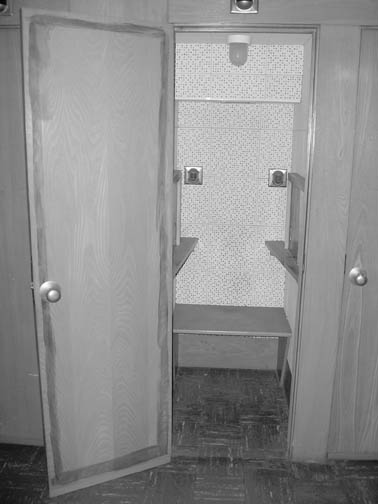
OLYMPUS DIGITAL CAMERAMy workplace had a lot to do with the setting for Madhouse Fog.  It’s an old madhouse.  Sometimes, it would drive me a little mad.

I actually showed up late for my job interview.  I was on campus with plenty of time.  My interview was scheduled to be in a room in a building called Bell Tower West.  I went to the Bell Tower building and I could tell I was in the right place because I saw the actual bell tower.  I walked around that building for ten minutes trying to figure out why the numbers of the rooms weren’t exactly sequential and why the room number I had for my meeting wasn’t close to the room numbers I was seeing.  I was afraid I’d actually miss the interview.  Luckily, one of the interviewers was running late.  I didn’t know who he was, but I stopped him in the hall and asked for directions.  He introduced himself and walked me to the interview.  I was only a couple of minutes late, but I walked in with my alibi.

At the end of the interview, the woman in charge asked me if I had any questions.  I had the typical responses that I’d learned to ask at all job interviews.  They gave me the typical answers to those questions.  Then, I asked a genuine question.  I said, “If this is a brand new university,” which it was; it had only been in operation for about a year at the time, “why are the buildings so old?  What was this place before it was a university?”

The three-person panel looked at each other and smiled.  They all knew something good and seemed unsure whether or not to share it with me.  Finally, one of them said, “It was a nuthouse.”

I guess I looked too confused, so another interviewer clarified matters for me.  She said, “These are the old grounds for the Camarillo State Mental Hospital.”

I laughed.  It was literally a nuthouse.  I knew I should’ve stayed focused on the interview, but all I could think was, there’s a novel here.

The campus at Channel Islands doesn’t seem like a nuthouse anymore.  It’s largely renovated.  Most of the more bizarre artifacts of the hospital have been torn down and replaced with something else.  Either that, or they’re inaccessible.  During my first few years teaching there, though, the relics of the madhouse surrounded me.

An old bowling alley still sits on campus.  It’s tiny and dusty and only two lanes wide.  You can stand on a bench and squint through a dirty, barred window and barely see the old warped-wood lanes.  They’re gone now, but I seem to remember, years ago, you could still see a few balls hanging around, hard chairs and scoring tables.

Underneath the old administration building which is now the library was the former hospital morgue.  Some students claim that the morgue is still there.  It’s not.  I was on campus the day builders tore down the old administration building.  It was an incredible structure.  Wrecking balls pummeled the roof, and the roof barely gave way.  I had the sense that, untouched, the hospital administration building would have stood on those grounds for centuries.  Maybe the new library will.  It’s pretty well built, too.  Like the old admin building, the new library is a beautiful structure.  I don’t mind tearing one of them down to build the other.  I spend a lot of time over in that library now.  I spent almost no time in the old admin building, mostly because it was always locked and I had no business there.  Supposedly, there were all kinds of crazy rooms in the building.  When the hospital was around, they had their own courtroom where a judge sat to try crimes committed on the grounds.  Apparently, the courtroom went down with the morgue and the rest of the admin building.  The courtroom was in an early version of Madhouse Fog.  It didn’t withstand the wrecking ball of my revisions.

On the day the old administration building came down, I stood next to a woman from personnel.  She started crying.  She told me, “I can’t watch this.”  She kept watching for a few more whacks of the wrecking ball, then said, “I can’t watch this,” again and left.  Part of me empathized; part of me saw the other side of the story.  Sad to see the old admin building go, but this was a university, not a museum.  Life goes on.

There used to be an outdoor stage on campus, too.  A small concert shell.  It was in the north quad.  It stuck around until the summer of 2011, when progress took it down.  I didn’t see it come down.  I don’t know why it did.  I hope for structural reasons.  I hope it was just structurally unsound.  Otherwise, it would’ve been a great place for outdoor performances.  Back around the time when I was writing the first draft of the novel, the student government brought in some manufactured “indie” rock band to play the concert shell.  I don’t remember who they were.  I’m sure I could find out, if I cared enough.

There was also a hallway of murals on campus.  I think that came down with all the recent North Hall renovations.

The coolest artifacts were right around the corner from my office on campus.  When I wrote the first draft of Madhouse, my office was in a building called Malibu Hall.  In its previous life, Malibu Hall was the center of worship on hospital grounds.  To the west of my office was the Protestant chapel.  We still hold events in this room.  It still feels a bit like a church.  Behind my office was the Jewish temple.  That was turned into classrooms for the music department.  I think they still use it for that.  To the east of my office was the old Catholic church.  The Performing Arts program uses this room now for classes and plays.  I saw a play about the Donner Party in the old Catholic church a few semesters back.  Recently, Performing Arts put on a presentation of Cabaret in the old church.  I should’ve gone to savor the irony, but I’m just not a fan of musicals.  In the back of the church were the old confessionals.  They were empty when I started writing Madhouse.  A couple of times, I went over and checked them out, my Catholic childhood itching me like a phantom limb.  Now the confessionals are used as closets for Performing Arts junk.

The confessionals and the courthouse ended up on the chopping block of the novel.  The outdoor stage, the hall of murals, and the bowling alley survived, though I bastardized them.  The things from the old psych hospital days that survived the most in my novel were the stories I heard from old employees.  But that’s a whole other column.
Me and The Blue Hearts

Blue Hearts CoverI write a bi-monthly column for Razorcake magazine.  Despite the fact that it’s a music magazine, I almost never write about music.  This is one of the privileges of founding a magazine yourself, I guess.  Anyway, for my seventy-fourth Razorcake column, I decided to write about one of my favorite bands, The Blue Hearts.  They’re a Japanese punk band from the eighties and early nineties who, despite being seminal in Japan, are largely unknown in the US.

You have to actually buy the issue of Razorcake if you want to read the column.  (You can do that here, if you want.)

You can also listen to the column for free.  I recorded a podcast of me reading the column.  I mixed songs by The Blue Hearts throughout.

Listen to the podcast here.

Reflections on the Writing of Madhouse Fog, Part 1

To celebrate the release of my forthcoming novel, I’m posting a series of short pieces about writing the novel.  This series is meant to address the questions people tend to ask me about the writing process, the inspiration behind my novels, and the other writers who’ve influenced me.  Here’s the first one.Foggy Ventura 1

I never enjoyed writing like I enjoyed writing Madhouse Fog.  I set it up to be a liberating experience, a novel written mostly for fun, and that’s how that first draft felt.

I started writing it in January of 2007.  It was a time of limbo in my life.  In November of 2006, Manic D Press had agreed to publish Train Wreck Girl.  When I’d talked over publishing schedules with Jennifer at Manic D, we’d decided that the book would come out in the summer of 2008.  It was too late for the book to come out in the summer of 2007, and I could only tour during summers.  So that novel was written, sold, and sitting on ice for a year.  I’d also decided to go back to graduate school to pursue a Ph.D.  All of my applications were submitted.  There was nothing for me to do but wait on those.  My teaching schedule was hectic that semester, as it is every semester, but I didn’t have to be on campus on Mondays or Wednesdays.  Writing on novel on those days seemed like a good idea.

I wanted to do something different, too.  Before I had an idea of what I wanted to do, I had an idea of what I didn’t want to do.  Specifically, there were two things I wanted to avoid.  First, when I wrote Train Wreck Girl, I had an outline.  I had a few of them, actually.  I wrote the bulk of that novel in the summer of 2005 and I followed an outline pretty closely.  In the summer of 2006, I decided that the outline made the ending too predictable and serious changes had to be made.  I wrote a new outline and rewrote the second and third two-thirds of the novel.  When I got to the end this time, it occurred to me that, if I were the main character, I would act differently in that last chapter.  I broke from the outline and did what felt organic.  I thought it strengthened the novel.  I told myself, “That’s it.  No more outlines.”  With Madhouse Fog, I figured I’d take it all the way in that direction.  Not only would I write without an outline, but I’d write without a clear idea of what was supposed to happen.

The second thing I wanted to avoid was writing for an audience.  Any audience.  I’d been writing for Razorcake for six years by then, and for Flipside for five years prior to that.  I’d published hundreds of pieces in punk rock zines.  I felt I knew my audience and wrote in a way that was very much tailored to fit that audience.  There’s something comforting in that.  I didn’t necessarily want to give that up.  I’d keep writing in that style for Razorcake.  I just felt like, with this novel, I wanted to expand beyond that.

At the time, I couldn’t shake the nagging feeling that a gulf existed between the novels I wrote and the novels I loved to read the most.  Then (as now), if I were asked to name my favorite author, I couldn’t do it.  If I were asked to name my favorite two authors, I wouldn’t hesitate.  Haruki Murakami and Thomas Pynchon.  At the time, I’d read everything published by Thomas Pynchon and everything by Murakami that had been translated into English.

I asked myself, what if I could write my own Murakami novel?

Well, first I knew that I couldn’t.  My voice is my voice.  No matter what I think I’m doing when I write fiction, no matter how different I think the main characters are from me, they always talk just like I talk.  I think that’s a good thing.  I like the way I talk.  I’ve spent decades fostering this voice.  I don’t want to lose it.  And, luckily, I couldn’t lose it if I wanted to.  So if I tried to write my own Murakami novel, the first thing I knew was that it would really be a Sean Carswell novel.  Just as Drinks for the Little Guy was supposed to be my rendition of Tortilla Flat and no one picked up on that (except for Bob, the former drummer for the band Tiltwheel); just as Train Wreck Girl was my version of Chester Himes’ A Rage in Harlem and not even Bob picked up on that, this would be my version of Murakami knowing full well that it wasn’t going to be that much like Murakami.

But I also knew a lot about Murakami’s process.  I’d read about him writing his first couple of novels while standing at his kitchen counter after work.  He’d written his third novel, A Wild Sheep Chase, without any sense of where the novel was going.  Reading the first half of that book, it’s clear to me that he’s trying to find his plot and that his unnamed narrator is groping for a story to situate himself in.  I figured I could start there.

I started working on it the week before the semester began, somewhere mid-January, 2007.  I had a clear idea of where I wasn’t going to go with the book, but no clear idea of where I was going to go.  I also had no pressure.  The big events of my life were nestled in the past or waiting for me in the future.  I had this nice little pocket of time that was just for me.

I started typing and hoped it would turn into writing.

The First Madhouse Fog Reading

Jay_Carswell_ReadingMadhouse Fog won’t be released for another six weeks, but it is printed.  My author copies have come in the mail.  I’ll do my first reading from the novel this coming Thursday, April 25, at 7:30.

The reading is on the campus of Cal State Channel Islands.  I’m teaming up with one of my favorite writers, the poet James Jay, and with one of the most remarkable writers in the CI writing program, Justin Robinson.  The event is free.  It’s open to the public.  It costs six bucks to park on campus.  Once you’re on campus, find Aliso Hall, room 150.  It’s the big lecture hall directly to the left of the doors leading into Aliso.

It’ll be a fun night.  If you’re in the area, please come.

Also, because many of my students will be there and I don’t want to profit off them, I’ll be selling the book cheap.  Ten dollars a piece.  After this, I’ll sell the book at the regular cover price at readings.

Book Trailer

There’s a new trailer for my upcoming novel.  You can watch it, then learn how it came about.

The Making of a Trailer

Book trailers are strange beasts.  I’d never done one before.  And, to be honest, a couple of my books are older than the tradition of book trailers.  I wasn’t planning on doing one for Madhouse Fog, but a few things fell into place.

First, I was down at Razorcake HQ one day.  Most people go to the HQ to work.  I go to hang out and make sure no work is getting done.  While I was hanging out, I met a filmmaker named Jennifer Swann.  She was there to do some video editing for the Razorcake YouTube page.  She and I got to talking.  I asked if she’d ever done a book trailer.  She’d never heard of them.  I showed her a couple, then asked if she was interested in making one.  She said, “Sure.”

I wrote the narration and tried to narrate it myself.  It didn’t sound right.  My voice didn’t sound like the voice I’d imagined for the narrator of the novel.  When I wrote the book, I didn’t have anyone’s voice in mind.  I just knew that the narrator didn’t sound like me.  I talked it over with my wife.  She suggested that I rope a friend into doing it.  I did.  I fed my buddy John Guelcher three beers and made him read the same page into a microphone seven or eight times.  I took the best parts from each reading and mixed them into one file.

I’d also been playing music with some friends who live locally.  They were more expensive.  I had to give them both beer and whiskey.  We hung out one Saturday, during which I taught them the song that I wanted them to play, we practiced it, and we recorded it.   Like John’s recording, our recording went through seven or eight takes.  My buddy Doug mixed those eight takes into one solid one.  He added John’s narration on the top.

We gave this all to Jennifer, and she put together the footage.

And so I learned this: if you want to put together a DIY book trailer, you have to have a lot of talented friends who will tilt windmills with you.

Montreal

barneys_crew_cover_womanOn some nights, you just know you’re going to bomb.  If you’re lucky, someone’s there to record it.

Mickey Hess went first.  He couldn’t buy a laugh in that overheated art gallery.  And his story was funnier than the one I was planning on reading.  Joe Meno went second.  He met a wall of apathy.  And his story was more heartfelt than the one I was planning on reading.  I knew the signs.

I’d done so many readings at this point that I knew exactly how to react: read the shortest of my stories and call it a night.  For some reason, I didn’t follow that very simple advice.  Maybe it was the swampy Montreal summer heat making me ornery.  Maybe it was something about the crowd.  They were too urban, too hip for a rogue like me.  Maybe I just felt like lingering over a long story.  Who knows.

Anyway, in the face of the hostile crowd, I picked the longest story in my repertoire, and I read it nice and slowly.  Eighteen minutes, all told.  And the owner of the art gallery recorded it.  Slapped it up on the web for anyone to hear.

Last night, I was thinking about bummer readings and this night in Montreal in 2005 came to mind.  I knew that the art gallery owner had posted this sucker online.  I wondered if it was still there.  A quick Google search revealed that it is.  So, if you’re interested, you’re welcome to listen to a hot and awkward live reading of my short story “The Last Days at Fulton County Stadium” from the collection Barney’s Crew.  Just click the link below.

Sean_Carswell_Last Days at Fulton County Stadium

Hollywood Pretty

sean_illo_39_by_brad_beshawIn the movie The Hours, Nicole Kidman as Virginia Woolf walks halfway down her stairs and pauses.  Inspiration has struck.  She tells her husband that she believes she has the first line of a novel.  The film cuts to her sitting comfortable in a writing chair among the soft morning light and using her favorite pen on lovely paper to construct what becomes the word-for-word first sentence of Woolf’s Mrs. Dalloway.

I like this scene because it’s absurd.  It’s absolutely nothing like the real life process of writing.  Novels are inspired, sure, but that inspiration doesn’t visit us from up high like a muse or like God handing down the fifteen commandments to Moses*.  Instead, novels linger in our imagination for days or months or years until we finally decide it’s time to let them live outside our imagination.

When I pause to think I have the perfect first sentence, it doesn’t emerge as a complete sentence.  Like everyone, I have ideas that I have to translate into words, and translations evolve from the idea to the idea’s representation on the page.

And writing novels isn’t scenic and softly lit.  It’s a daily process of hammering out a few words, paragraphs, or pages until, several months later, you actually have something.  Then there are the years of revision.  The first sentences of every novel I’ve written came at least a year after the original draft of the novel was complete.  They are all revisions.  The first sentence of Madhouse Fog was one of the last things I wrote.

Also, Virginia Woolf looked nothing like Nicole Kidman, and the first sentence of Mrs. Dalloway isn’t that cool.

Then again, I’m a very different writer from Virginia Woolf.  Woolf said that writers need to have a room of one’s own and a monthly stipend that allows one to focus solely on writing.  I still don’t have either of those things.  And it’s okay.  Charles Bukowski said something like, “No writer who could write worth a damn could write in peace.”  I believe in that.  Not because it’s necessarily true.  Just because it’s a better representation of the world I live in.

So in honor of these thoughts, I want to include a column that I wrote for Razorcake back in 2007.  It’s about writing the first draft of Drinks for the Little Guy.  I think it’s an honest representation of what writing a first novel was like for me.  It’s definitely not pretty like a Hollywood movie.

Here’s a link to download the PDF of the column: Carswell_Column_Razorcake_39

*Perhaps you were thinking there were only ten commandments.  You forget that God handed Moses fifteen, and he dropped the stone tablet with the first ten.  At least that’s the way Mel Brooks and I remember it.

One Hundred Awful Pages

A few years ago, I was invited to be the visiting writer in the University of Redlands Visiting Writer Series.  As part of the activities, I participated a writing class.  It was taught by the novelist Patricia Geary.  It was one of the coolest classes I’ve ever been in.

Students were required to write one hundred pages of a novel over the course of the semester.  I visited late in the semester, when they were all deep into their respective stories.  Everyone in the class knew what everyone was writing.  They were into it.  They talked about one another’s characters as if the characters were part of their lives, people they saw down at the student union or at parties the past weekend.  The students were flush with the excitement of creation.

Smith CoronaIn retrospect, probably only a handful of those students actually finished the novels after the class.  Maybe fewer than a handful.  I doubt the finished novels were published.  More than anything, I’m willing to bet most of the students are now embarrassed by what they wrote then.  But that’s okay.  In doing that, they learned one of the most important lessons of writing: you have to write a lot of shit before you can write something good.

Before I go on, I have to admit that I didn’t know any of those students or their writing.  They may have all been brilliant.  Everything I wrote in that last paragraph is pure projection.  I’m not thinking about them as much as I’m thinking about me and how important it was for me to write a hundred awful pages before writing my first novel.

In 1994, I lived in Atlanta and worked as a waiter in a downtown restaurant.  I lived in a studio apartment.  Every morning before going to work, I wrote.  My whole goal in moving to Atlanta and working that job was to write a novel in the mornings.

In February of that year, I started working on a novel.  I wrote four or five pages a day on it.  I wrote on an old Smith Corona word processor with a screen that only showed four lines of text.  You could save up to twenty-five pages on a disc.  I filled up about a disc a week.  I was so excited.  Words just flowed out of me.  I felt like I was tapping into my masterpiece, like Kerouac when he powered through the original scroll of On the Road in three weeks.  I wrote like crazy and didn’t reread what I wrote.  When I was done writing, though, I knew that I was brilliant and every word was a little nugget of gold.

Sometime in early March, about five or six discs in, I thought about printing everything up and taking stock of my progress.  This was a big decision.  It took a few minutes to print a single page on those old word processors.  Printing the whole file would take me  a couple of days.  I decided to read off the little screen, instead.

A creeping sense of panic seeped into my bones like a cold, rainy morning.  I tried to fix things on  a sentence level on that first disc or two.  By the third disc, I stopped even that.  By the last disc, I calculated the cost of word processor discs and the value of this novel I’d been working on.  I decided that the discs were worth more.  It would be okay to write something else and save those files right on top of the novel I once thought was my On the Road.

I remember what was wrong with that novel.  I remember a lot about it.  A painful amount.  I’m not telling you what was wrong with it because it was so wrong, so embarrassing.  And because I don’t have to.

In the nearly twenty years that have elapsed since then, I’ve never regretted abandoning that work and writing over the original files.  I’m proud of that young man in 1994 who recognized a lousy book when he read one.  Even if he was the one who wrote the book, he was okay with putting it down and picking up something else.  After I abandoned that first novel, I started writing Drinks for the Little Guy.  I actually started it the next morning.

I know Drinks is far from a perfect novel.  I’m not even sure it’s a good one.  I’m the one who took it out of print, in fact.  But I’m still glad I wrote it.  I’m not too embarrassed if you read it.  It has its charms.

Minneapolis

TWG_tour_poster_MinneapolisAfter I finished my reading at Arise Bookstore in Minneapolis, the God Damn Doo Wop Band took the stage. And, by “stage,” I mean the empty area in front of the chairs in the backyard of Arise. It was one of those perfect Minneapolis days that apparently don’t happen all that often but seem to happen every time I’m there. It was sunny, temperatures in the low eighties, an even cooler breeze. The sun was starting to set behind the bookstore. The band sat on a low wall.

The God Damn Doo Wop Band: three women who know how to spend their money on boots and tattoos and hair dye, who, more importantly, know how to sing doo wop songs. They launched into three-part-harmonies about boy troubles. On the one hand, they seemed like an authentic throwback to the Staten Island doo wop of the fifties. On the other hand, it was something totally fresh and original.

One of the band members is named Annie. She used to be in the Soviettes. She didn’t wear boots. Her Vans were worn through just above the big toe. As she sang, her big toe popped out of the hole in her shoe. A little red toenail kept the beat.

Train Wreck Girl Interview

In preparation for the publication of Train Wreck Girl, Manic D Press emailed some questions over my way.  It was a mock interview, of sorts, that press outlets could use for various quotes or to supplement the press release.  I found it on my computer while doing a search for another file recently, and I thought, hey, this is blog-worthy.

Without further ado, here are my answers to the publisher’s questions about my book.  They are all accurate as of February, 2008.

santa_clara_and_california

While this is fiction, the scenes in Cocoa Beach, FL and Flagstaff, AZ reveal an uncanny familiarity. Did you live in these towns at some point?

I lived in both of them.  I was born in Cocoa Beach.  Most of the novel takes place in my old neighborhood in downtown Cocoa Beach.  I lived there for a few years.  I loved it.  It had its shady elements, but rent was cheap and you could walk to the beach and the bars.  It was also right by the library, which was great.  Cocoa Beach has an amazing public library, especially when you consider it’s a small town in Florida.

I lived in Flagstaff for a couple of years, also.  Though I changed the names of a lot of the places, people who live in either of these towns will probably be able to pinpoint where I’m talking about and pick up on some inside jokes.

The characters in Train Wreck Girl are very three-dimensional. Are they entirely fictitious, or based on people you’ve known?

Well, people who are close to me will probably read about the Bart character and think, oh, he drives the short bus during the day and picks up dead bodies at night, so he must be based on Sean’s friend so-and-so.  Or they’ll read about Sophie yo-yoing in and out of rehab and being the nicest, sweetest woman when she’s sober and think she’s based on an ex-girlfriend.  And if they want to believe that, they can.  The more you want to believe about the book, the better, as far as I’m concerned.

A lot of the characters do have a great deal of back story written about them as well.  They’ve popped up in other stories and books of mine.  If I can use a main character from one story as a minor character in another, I try to do that.  This way, if you read all of my books, you can get a richer experience than if you just read an individual book.  It’s kind of like what Faulkner did with Yoknapatawpha County.  Only Faulkner wrote all these amazing novels worthy of his Nobel Prize, and I write a bunch of stories with characters who get drunk and say dude a lot.

There are so many coming-of-age novels, what makes this one different?

When I was getting into my early thirties, I noticed that a few of my friends were going through a little crisis that basically amounted to: I always thought I had no future and now I’m living in the future.  I lived fast and didn’t die young; what do I do now?  And I had noticed this about my friends because I was going through that same crisis.  So that’s why I wrote Train Wreck Girl.  It’s my way of trying to answer those questions I didn’t really have an answer to.

Most coming of age stories deal with the realization that the world is a lot crueler than we all thought, and that realization generally comes at the end of the adolescent years.  This novel is about the realizations we hit a little later in life, at the end of the dude years.

When did you start writing fiction?

When I was in second grade, I was getting into a lot of trouble because I had a teacher who taught to the dumbest kid in the class, and I wasn’t him.  I was bored all the time, looking to start something.  So my mom gave me a little notebook and told me to write a story in it whenever I was bored.  Ever since then, writing has kept me out of trouble.  More or less.

Has being a publisher at Gorsky Press changed you as a writer?

Yes.  Being a publisher has taught me that the world doesn’t owe me anything just because I wrote a novel.

Does Train Wreck Girl have a message that it’s trying to impart to its readers, or is it strictly entertainment?

First off, I hope it’s entertaining.  That’s the most important thing.  That’s what all the fart jokes are about.  But there are definitely some serious themes that I explore and I hope the reader leaves the book thinking about things they haven’t thought about before.

You’re teaching college these days but you’ve had many varied work experiences. What were some of your favorites and why?

I worked in a school board warehouse for a while and I only had to do about three hours of actual work in an eight hour shift.  The rest of the time, I’d find a remote corner of the warehouse and read the obsolete library books.  It was great.

I also worked in a rock and roll bar for a while, and just about everything we did was illegal.  I don’t think we had a liquor license or even a business license.  Everything was cash, right down to the kickbacks we gave the police department bi-weekly and the five-dollar bills we gave to the crackheads to mop the cement floor after the shows.  All of my favorite local bands played while I was working there, and even a few of my favorite out-of-town bands.

I liked being a carpenter, too.  It was very fulfilling to walk onto an empty slab on a Monday morning and see the frame of a house on that slab by Friday afternoon.

Do you surf?

Yes.  I started surfing about twenty-five years ago, when I weighed ninety pounds and the tiny Florida waves could push me around.  Some of my best memories of Florida are attached to the names of storms.  Like, I remember the day after Hurricane Floyd swept through Cocoa Beach, I kept checking the waves every couple of hours until the water was calm enough to actually paddle out into.  And just about everyone in town had evacuated before the storm hit, so when I did get out to where the waves were breaking, there were just two other surfers and me and all the overhead waves we could surf.

Now I live between a few world class breaks in southern California, so I don’t have to wait for a tropical storm for the waves to be good.  I still surf a couple times a week, if I can.  I surf more in the winter when the waves are better.