Girl Factory

Girl FactoryThree or four years ago, I had an idea to write a regular feature for the local Ventura weekly called (in my mind), the Indie Book of the Month Club.  The idea was to write a review/personal essay about a book on an independent press.  Independent publishers don’t get nearly enough press.  I read books from indie publishers all the time.  I figured I could dedicate seven or eight hundred words a month to promoting the cause.  So I wrote a sample essay, walked down to the VC Reporter, and plugged my idea.  The editor said no.

Last year, my buddy James Jay came up with a similar idea for a column for the local Flagstaff weekly, Flag Live.  He asked me if I was interested in being one of three writers for this column.  I said, “Sure.”  I told him that, if he wanted a sample to pitch to the editor, I already had one.  I emailed the sample to him.

Time passed.  The editor at Flag Live asked James, Mark Gibbons, and me to all write our first installment.  I wrote another column for the weekly.  I sent it to James.  I didn’t hear anything about it.

Fast forward several months.  I was in Flagstaff for the Northern Arizona Book Festival.  In between events, James Jay told me, “Oh, yeah.  Your book review ran in Flag Live.”  I’d completely forgotten about the column idea.  I thought he meant that the weekly had reviewed Madhouse Fog.  A confusing conversation followed.

All is cleared up, now.  I’ll be writing a monthly book column with James Jay and Mark Gibbons.  We’ll each write four a year.  If you’re interested, you can read my first installment of the Flag Live column “Words that Work” here.

People I Read With: Jim Ruland

JimRuland

Long ago, I went to the inaugural reading at a downtown arts space in Flagstaff, AZ.  The place wasn’t much more than an unfinished basement with some chairs set up all facing one direction and a clip-on work light hanging up so the readers could see what was on the page.  I don’t remember there being a cover—surely I would’ve skipped the event, if there were—and I don’t remember anything being for sale.  I do remember a ramshackle room in the back where the guy running the space clearly lived.  There also seemed to be an unspoken openness to shaggy guys like me bringing my own 40 to the reading.

The guy who read first was a big, palooka-looking dude whom I’d hung out with a couple of times.  I wasn’t too sure about the guy. He seemed to have a taste for whiskey and the trouble that tends to accompany it.  I also knew he was a big Thomas Pynchon fan.  And that was about all I knew of him.  Pynchon and whiskey.  Not the most auspicious start, but surely a common enough one to seem almost cliché among white, male, American writers.

He read an insane story, something about a farmer using a yak as a work animal.  Who knows exactly what it was about?  I remember lines from it, I think verbatim: “Yak man, hoeing and yakking, yakking and hoeing.  Yak man.”  And he’d really slam the delivery of yak man.  Something about those two words were important, somehow to someone.  “Yak man!”

It cracked me up.  I don’t know why.  I also decided the dude was nuts and I should stay away.

Nearly twenty years later, this same guy opened up my book release for Madhouse Fog.  I’ve seen him read dozens of times, set up several of his shows, read at several shows he’s set up.  I’ve regularly attended his Vermin series.  I worked with Gorsky Press to publish his collection of short stories, Big Lonesome.  I’ve read all seventy-something columns he’s written for Razorcake. I’ve forgotten to tell a few incriminating stories about him in the hope that he’ll forget to tell a few incriminating stories about me.

Watching him read at Skylight last weekend, I couldn’t get that damn yak man out of my head.  Not because of all the hoeing and yakking.  Because of something that happened right after that long-ago reading.  A mutual friend of ours—one who knew that Ruland had lived in LA prior to coming to Flagstaff—said, “One thing you learn about doing readings in LA, man, is that you gotta bring it.  They’ll kill you if you don’t.”

You Will Know My Wrath by Its Sweet Goatee

You spend a couple years of your life trying to start a punk rock magazine.  You live in poverty so pure that you start looking up the definition of the word “abject.”  You do your grocery shopping at the 99-cent store.  You wonder if you can splurge that week on the baked beans or if you have to stick with Top Ramen because it’s cheaper.

The magazine finally catches on.  It becomes one of the two biggest punk rock rags in the nation.  Years pass.  You have a new book coming out.  The very magazine you co-founded posts an announcement about your book release.  Some snot-nosed punk writes about it and does nothing but make fun of you.  What do you do?

You state your response publicly.

Like this: Matt Hart, you have become my nemesis.  Make sure you see me coming before I see you.

madhouse_web_illo_by_josh_rosa

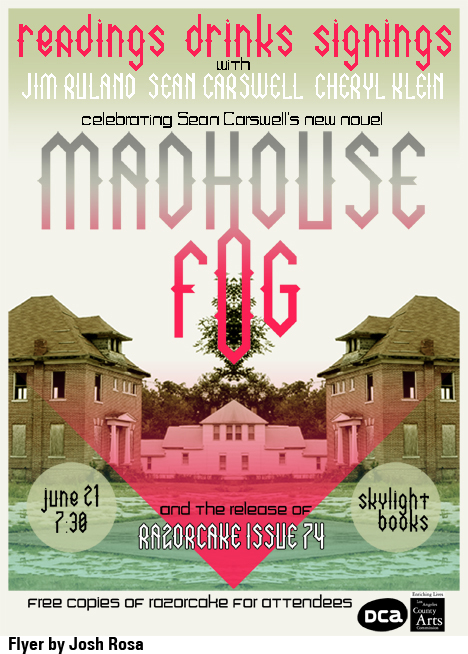
Actually, I thought Matt’s piece on the Razorcake web site was pretty cool.  You can click that link above or the flyer to read it.  It also serves as yet one more reminder of my book release at Skylight this Friday.

Hopefully, I’ll see you there.

Summer Reading

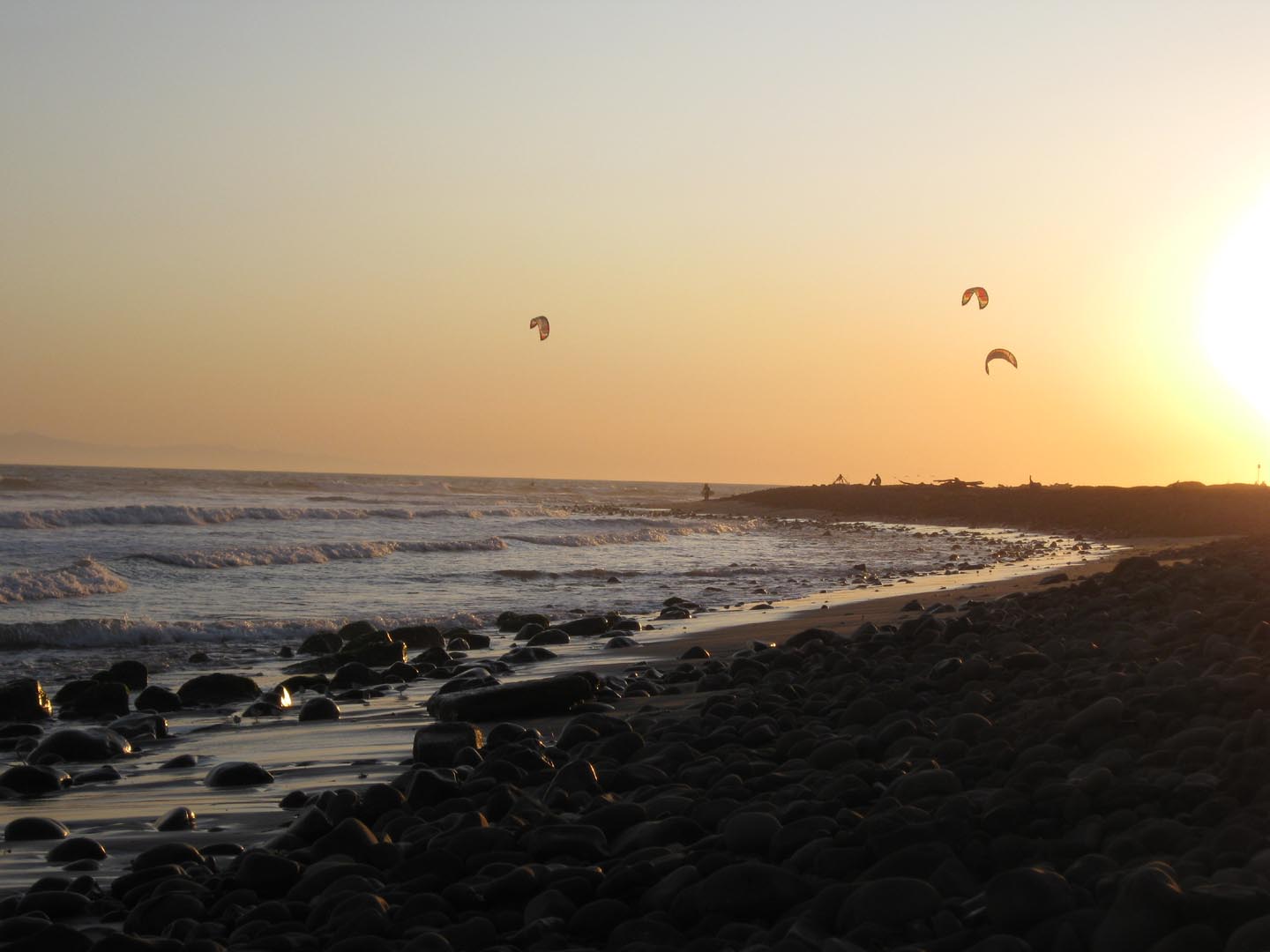
Foggy Ventura 2

It seems like a lot of people are coming out with summer reading lists these days.  I never put these together myself, in part because I’m a lit professor and I tell people what to read all spring and fall.  Still, I love summer reading lists.  Occasionally, I’ll get good recommendations.  Often, I’ll have the opportunity to rant and rave at the selections that I think are terrible.  The ranting and raving is usually done when I’m by myself.  It’s still fun.

I last month, I stumbled across the perfect summer reading list in the Arizona Daily Sun.  Nothing to rant and rave about.  It’s just a few good recommendations.  I’m particularly partial to the first book on the list.  Here’s a link to the article:

“Planting Seeds for Summer Reads”

The Madhouse Dog

clint dempseyThe protagonist of Madhouse Fog names his dog Clint Dempsey.   The dog is kind of a mystery in the book, and I won’t solve the mystery here.  I will talk about his name, though.

I started writing the novel in January, 2007.  At the time, the 2006 World Cup was still fresh in my mind.  For American soccer fans, the ’06 World Cup was a little bit of a disappointment.  We didn’t win a single game.  We tied Italy, which was pretty good, but we lost to the Czech Republic and Ghana.  Our national team coach, Bruce Arena, got fired because of this lackluster performance.

For me, the high point of the whole tournament came at the end of the US/Ghana game.  The US were down 2-0.  It was pretty clear we were going to be eliminated from the tournament.  Arena subbed in a young player named Clint Dempsey, hopefully to generate an offensive spark.  Dempsey did manage to score a beautiful goal, then do a ridiculous dance to celebrate.  Of course, the goal came too late.  Every time I watch it on YouTube (which is more than I should admit in a public forum), I feel like the US still has a chance.

You can watch the goal, too.

When I was writing the book, Clint Dempsey was still an upstart, a 24-year-old prospect.  I had visions of finishing the book, declaring it genius, and getting it published before Clint Dempsey really made a name for himself.

Unfortunately, it took me another six years to finish the draft, go through all the revisions, get the book published, and have it released.  At one point during the writing, I’d traded drafts of books with a writer friend of mine named Justin Bryant.  Justin’s a soccer fan also.  We talked about my early Madhouse draft during the 2009 Confederations Cup.  Justin was bagging on Clint Dempsey, who’d played poorly in the early games of the tournament.  Justin even tried to convince me to change the dog’s name.

The very next day, Clint Dempsey turned it on.  He became one of the heroes of the tournament and the US nearly beat Brazil to win the whole thing.  Justin called back.  He said, “Clint Dempsey’s a great name.  Keep it.”

Now, here we are on the original “release date” of Madhouse Fog.  It’s a kind of anti-climactic release date because, well, the book is already available in most stores and the book release party isn’t for ten days.  I’ll spend the evening of my release date watching soccer.

On the bright side, the Madhouse Dog’s namesake will be playing in a World Cup qualifier against Panama.  He’s now the captain of the US Men’s National Team.  All of my early enthusiasm about Clint Dempsey as a player is coming to fruition.  Leander Schaerlaeckens wrote a great piece about him this morning.  If my ramblings about Clint Dempsey aren’t enough, you can read this article.

My Book Release at Skylight

MF Event Art_smallOn June 21, Skylight Books in Los Feliz will host a book release event for Madhouse Fog.  I’ll talk more about the event as it gets closer.  Before I do, I’m going to talk about why I love Skylight.

1. I was there last week, buying a couple of books that I’d had my eye out for but hadn’t seen in bookstores yet.  Of course, I know that I can buy books online any time I want.  Usually, books are cheaper online.  But I’m picky about books.  I don’t want a used copies that the last reader smeared with chocolate stains (chocolate being the hopeful interpretation of a brown smudge).  I don’t want smelly books or dogeared books or books with annotations from students who write exactly what the professor tells them to in the margins.  I want brand new books that I can pour my energy into.  I want to see and hold the book before I buy it, if at all possible.  Skylight makes that possible.  I carry around a mental list of books I want.  Skylight always has more books on that list than I have money to spend.

2. As I was paying for those books last week, the guy at the counter saw my Razorcake shirt and told me that they were hosting an event with Razorcake on June 21.  He told me I should come.  Of course, I’ll come.  The event is my book release.  And nothing makes you feel more hopeful about an event than a bookstore employee plugging it a month in advance.

3. That was almost as cool as the time several years ago when I was buying books at Skylight with my debit card.  The woman behind the counter recognized my name on the card and said, “We carry a couple of books by a guy named Sean Carswell.  Are you that guy?”  I said I was.  She asked me to sign the copies in stock.  I did, feeling like a big-time guy with every stroke of the pen.

4. The next time I went into Skylight after that incident, my signed copies had sold.  Skylight reordered the books, and new copies were on the shelves.  If only every bookstore were Skylight.

5. It’s not all about me.  What makes them a great bookstore is their attitude.  Nothing seems to explain that better than this little piece on Skylight’s tumblr page.  Check it out: “What the What the Whaat!?!?”

Now I Don’t Have to Write It

clownWhen people learn that I’m a professor in an English department, they frequently say things like, “I better watch my grammar around you.”  Or they ask me how to spell things.  It demonstrates to me how little people tend to understand about what I do for a living.  I’m not a linguist.  Everything I know about grammar I know because I shared an office with a linguist for nine years.  Everything I know about spelling is nothing.  I would’ve misspelled “grammar” in that first sentence if not for the wiggly red line below my first attempt.

Assuming, though, that I focus on grammar and spelling is like meeting a stand-up comedian and assuming that he wears face paint, a red nose, and big floppy shoes.  Sure, the stand-up comedian you met when you were in the third grade dressed like a clown.  Things are a little different when we’re adults.

Anyway, I’ve often thought about writing an article that explains not so much what I do, but why I do it.  Luckily, a professor from Notre Dame wrote that article for me.  I read it in the New York Times this morning.

If you’ve ever wondered why you had to take a class in the humanities, or why I do what I do professionally, I recommend it.  Here’s the link: “Why Do I Teach?” by Gary Guttting.

Reflections on the Writing of Madhouse Fog, Part 4

To celebrate the release of my forthcoming novel, I’m posting a series of short pieces about writing the novel.  This series is meant to address the questions people tend to ask me about the writing process, the inspiration behind my novels, and the other writers who’ve influenced me.  Here’s the fourth one.
Foggy Ventura 4

My wife was working in a psych hospital when I wrote the first draft of Madhouse Fog.  She’d started the summer before I started writing.  On Tuesdays, the hospital cafeteria had a baked chicken special that my wife loved, so I’d come onto hospital grounds and eat lunch with her.  We ate together there several times before the summer ended and I started teaching on Tuesdays.

Of course, there aren’t separate cafeterias for patients and staff.  When I ate lunch with my wife, I also ate with the patients.  If I’m not mistaken, the patients worked in the cafeteria and prepared the food.

My wife also took me on a tour of the hospital once.  She used her key fob to get me into all the different buildings housing patients who ranged from very low functioning to very high functioning.  A lot of the patients came in and out of the hospital for a very short time: typically seventy-two hours.  Seventy-two hours is the length of a state-sponsored involuntary hold.  If you attempt suicide or otherwise demonstrate that your psychological health is a danger to yourself or others, you can get a seventy-two hour stay at this hospital.  Because most of the patients were there for such a short time, the staff didn’t get to know them very well.  Because most of the patients I saw were high-functioning and because they wore their regular clothes, they looked more or less like the crowd at the county fair.  In fact, I’ve seen more bizarre behavior at the county fair than I saw in my trips to the psych hospital.  To be honest, I couldn’t really tell who was a patient and who was staff without looking for ID badges.

The tour my wife gave me was brief.  For one thing, it was unauthorized.  No one really batted an eye.  I guess unauthorized tours of the psych hospital aren’t that uncommon.  But my wife didn’t want to get fired and I didn’t want to get her fired, so we kept things to a minimum.  Plus, at the time, I was working on the novel Train Wreck Girl, which maybe has some characters who could’ve done with thirty days at this hospital, but didn’t focus on these issues.

In January of 2007, when I first started writing Madhouse Fog, I called one of my wife’s supervisors, Dr. Randy Wood.  I arranged for an authorized tour of the hospital.  Dr. Wood took his time.  He showed me everything.  We got to talking.  I told him I worked at Channel Islands.  He said he’d worked there when it was the Camarillo State Mental Hospital.  We took a seat in a conference room and he told me stories about the old hospital for forty-five minutes.  The guy is a hell of a storyteller.

Did I steal some of those stories for Madhouse Fog?

Yes I did.

My visits to the psych hospital taught me a couple of things about writing a novel set in a psych hospital.  First, it taught me that patients aren’t a spectacle.  Movies that are set in psych hospitals always have crazy patients running around screaming, “Feces!” or otherwise bouncing off the walls.  In general, these actors act like someone you would find in the early morning hours of a bar where a coke dealer operates rather than someone with a mental illness.  Most of the patients I saw at the psych hospital weren’t crazy.  They were mentally ill.  The more severe the mental illness, the more drugs they were on, the more sedentary they were.  Most of the patients looked sad or tired or like they’d learned to mask their pain.  Certainly, the occasional patient does act up and need to be restrained.  This does happen regularly, but not regularly enough for me to witness it on several chance visits.

In general, though, patients at a psych hospital are nothing to gawk at.  They’re about as remarkable as patrons in a restaurant or shoppers in a mall.  If I really wanted to see mental illness, I wouldn’t have to drive up to the psych hospital to do it.  I could walk a few blocks to the park across from the post office.  There’s probably a gathering of homeless people putting their mental illness on display right now.  It’s a sight that we, as a culture, have chosen to ignore.  In fiction, we can’t treat it realistically or our realistic portrayals will be likewise ignored.  I would have to take a different approach with the novel.

To be honest, I’d never really considered writing a novel about mental illness or patients in a psych hospital.  I’d certainly never considered writing one in which those patients are a spectacle.  There’s something cruel about that.  Also, it’s been done before.  Cervantes did it so well with Don Quixote that, try as imitators might, it’ll never be matched.  No novel will ever be as popular or influential as Don Quixote has been.  I can only honorably bow to Cervantes, then walk down a different path.

I was thinking about Don Quixote when I wrote Madhouse Fog.  I was teaching Cervantes in one of my lit courses.  And while there is a cruel kind of giggling that occurs when I read about the characters tormenting the delusional don, I recognize that that’s not where the power of the novel comes in.  The real power of Don Quixote is the creeping fear we feel when we’re around a delusional disorder, the fear that the other person might not be the one with the delusions.  And now that we live in such a quixotic world, now that our concept of the world is built so much on fiction, now that we live in an economic system that is propelled by fiction (the fiction that bottled water—tap water from Jersey wrapped in a petroleum by-product—is safe and clean to drink, the fiction that cars are freedom), how can we feel any sense of a non-fictional world?

Exploring those questions was so much more compelling to me than gawking at mental illness would’ve been.

Northern Arizona Book Fest

NABF_PosterThe annual Northern Arizona Book Festival will be this upcoming weekend (May 18).  It will feature readings by authors Pam Houston (Cowboys Are My Weakness), Betty Webb (author of the Lena Jones mystery series), and Sean Carswell (America’s greatest living novelist*).  There will also be music, panel discussions, and (hopefully) assorted madness.  It’ll be held at the Coconino Center for the Arts.

If you’re in Flagstaff this coming weekend, please stop by.  If you’re not planning on being in Flagstaff, change your plans.  Get there.  It’s going to be awesome.  Way cooler than watching someone graduate from college**.

Notes:

* If not America’s greatest living novelist, I am at least the greatest living novelist performing at the NABF between 1:00 and 1:45.

** Apologies to my students and colleagues who’ll be attending to CSUCI graduation ceremonies that day.

Reading with James Jay

I did my first reading from Madhouse Fog on April 25.  It was kind of a pre-release event.  James Jay joined me in this reading.  It must have been somewhere between the twentieth and fiftieth time I’ve done a reading with him.  For various reasons, each one seems different.

When did I first do a reading with James Jay?  I don’t know.  It probably would’ve been back in Flagstaff, somewhere around late 1994 and early 1995.  I seem to remember a basement space called the Difference Machine hosting some readings.  Did we team up there?  Was it at that other weird art space near the brewery on Beaver Street?  Our first reading together could’ve been either, neither, or both.

James Jay teamed up with me when I did a Drinks for the Little Guy reading at Bookman’s in Flagstaff in 1999.  Or maybe he didn’t.  Maybe he just booked the reading and rustled up the crowd.  I know we did Bookman’s together when Glue & Ink Rebellion came out.  I read with him at the book release events for both of his books.  He joined me on a West Coast tour to support my short story collection Barney’s Crew.

We’ve teamed up to do readings in packed theaters for big time events, in empty record stores and sweaty art galleries and the most crowded bookstore in Seattle one summer night nearly a decade ago.

This time, he joined me in the science lecture hall on the campus of CSUCI.  He was more of the big time guy than me, even though I was the one with the new book.  My students had been studying his collection The Journeymen in their writing class.  They’d spent several hours discussing his poems.  They’d written essays on his work.  Now, they were seeing him live.

I couldn’t pick a better writer to be upstaged by.