Memories of Murder in my Life

Illustration from Razorcake #37 by Brad Beshaw

Illustration from Razorcake #37 by Brad Beshaw

My brother had the big idea to make and sell “Free Jones Hand” t-shirts. Jones Hand was a guy I went to high school with. He sat behind me in an advanced algebra class. We weren’t friends, exactly, but we talked a lot. He signed me yearbook. “To a pal. Keep in touch,” he wrote. I think I only asked him to sign it because he asked me to sign his, and I didn’t want to seem like a dick. I remember thinking that Jones was a good enough guy, even if he did reek of booze most mornings.

A few years later, Jones had a psychotic break and attacked his Narcotics Anonymous sponsor with a hatchet. Jones cracked the poor guy’s head open.

When the news hit my hometown, most people acted stunned. I told them, “I blame the parents. Of course your kid’s gonna be a drug addict if you give him ‘Jones’ for a first name.” I rarely got a laugh when I said that.

My sister was shaken up by it all. She was friends with Charles Hand, Jones’s younger brother. Charles was rightfully torn up about all this. In fact, no one thought my brother’s idea about a “Free Jones Hand” t-shirt was funny. People responded to him with that long, slow, scolding “dude.” As in, “Duuuude. Not funny.”

I thought it was funny. I wanted one of those t-shirts.

I still kinda want one.

 *

I don’t even remember Ramon’s real name. He’d been in a high school Spanish class with my brother. Ramon was his Spanish class name. He was a suburban White kid like the rest of us. He worked at the Cinnabun in the mall. In those days, it wasn’t uncommon for my brother, my friends, and me to get a big soda at the mall, spike it with whiskey, and get drunk on the mall benches. This led to a lot of heckling. Ramon was often on the receiving end of this heckling. Nothing malicious. Just longwinded hoots of “Ramooooon” when he walked by.

Ramon was a tall, fat, sad guy. He’d shake off the heckles with a wave of his hand.

Our ability to heckle Ramon ended when Ramon killed a hooker under the 520 bridge. A buddy of his helped Ramon dispose of the hooker’s body. They both got caught.

*

Wendy was part of the whole crew I ran with back then. She was a sweet girl. There’s no other way to put it. She dated my brother for a while. Even my brother would say, “She’s too nice of a girl to date a guy like me.” They broke up after a couple of months. I don’t remember why. It wasn’t hostile or anything. Everyone remained friends. She was still part of the crew.

Wendy had a thing about birthdays. She always remembered people’s birthdays. On my twenty-third birthday, everyone forgot. My parents forgot to call. I worked all day with my brother. He forgot. No one at work remembered. My roommates didn’t remember. That night, we all went out drinking. Not to celebrate my birthday. Just because we drank every night. I ran into Wendy that night. She said, “Happy birthday.” She bought me a beer.

When Brian Zettle turned twenty-one, we all went out to celebrate. Since he actually didn’t turn twenty-one until midnight, we started the night at the restaurant where Wendy worked. Wendy brought us our first pitcher of beer and said to Brian, “You turn twenty-one tomorrow, don’t you?” Brian nodded. Wendy said, “Happy birthday.” She served us several pitchers before the ten o’clock closing time.

We all ended up at Spanky’s Pub. Wendy included. I drank a lot. Threw darts. Talked smack. Played songs on the jukebox. We all did. At midnight, Brian wanted to get his first legal drink at the strip club around the corner. I remember inviting Wendy to go with us, just to be polite. Very politely, Wendy said, “No thanks.” She was hanging out with a dude. For the life of me, I can’t remember what he looked like. Wendy introduced me to him. I shook his hand.

Later that night, after the rest of us had closed the strip club and stumbled drunkenly home, Wendy’s dude took the same hand that he’d used to shake my hand, wrapped it around Wendy’s neck, and strangled her.

Now, I think about Wendy every time I have a birthday.

*

Bart Staeger was one of my brother’s roommates in college. He got in a fight with a guy named Steve Austin—I’m not kidding about the name; it’s real—outside a bar in Orlando. Steve Austin punched Bart. Bart kicked Steve. Steve fell on the curb, cut open his head, and, because he was a hemophiliac, he bled to death. Orlando doctors did not have the technology. They could not rebuild him.

Bart’s one kick was renamed manslaughter and he was sentenced to five years in a maximum security prison. I heard he made parole in his third year.

 *

John Cox trained me when I started at the Groundhog Tavern. He showed me around a lot during my first days in Atlanta. He introduced me to a couple of other servers who would become lifelong friends of mine.

Back in those days, he dated this beautiful girl, Nikki. Nikki was pregnant with John’s baby. They were keeping the baby and would get married one day. In the meantime, John spent a good bit of time cheating on Nikki. Sometimes, he’d take his dates to the Groundhog. For some reason, he always sat in my section on these dates. I felt a little like I was cheating on Nikki when I served them.

I worked with John for a long time. I quit the Groundhog, moved to Arizona, moved back to Atlanta, worked with John again at the Groundhog. By this time, he was tending bar there. I never really drank at John’s bar, but a lot of hours of my life have been spent drinking with John.

The last time I saw him, a few years later, John had this huge abscessed tooth. It looked like he was smuggling a tangerine in his cheek. We played darts, did some shots, talked about old times. I’d like to say it was good to see John that night. Usually, it was good to see John. On this night, it wasn’t. John was all coked out and aggressive. I even let him win a game of darts, just to calm him down a bit.

I worried a little about Nikki and John’s five-year-old daughter.

At the end of the night, I told John, “Man, you gotta take care of that tooth. If that shit bursts inside your mouth and you swallow the poison, it’s gonna kill you.”

I don’t know if that’s true about an abscessed tooth. I wasn’t talking about the tooth, anyway.

A couple of years later, back in Atlanta, hanging out with one of those lifelong friends John had introduced me to, talking about all the old crew, I asked her about John Cox. Her eyes got big. “You haven’t heard?” she said. I shook my head. “Nikki was cheating on him and he couldn’t take it. He came home one night, shot her and shot himself.”

I couldn’t believe it. “They’re both dead?”

“No. He killed Nikki, but when he shot himself, it didn’t kill him. He’s paralyzed.”

“So he’s in prison now? Paralyzed?”

My friend nodded, big-eyed and sad.

“And the little girl?”

“Living with Nikki’s mom.”

 *

Tom Schwering was a shop teacher at my high school. One summer, I worked on a carpentry crew with him. The guy was kind of a hero to me. He was always giving me advice about dating girls, and the thing was, his advice actually worked. The year after I graduated high school, Schwering got shot in a botched coke deal. He survived. He lost his job at the high school, though, and moved back to his hometown in upstate New York. Rumor has it that he got shot in another coke deal in New York, and that time, he didn’t survive.

 *

And so on.

 *

I was tending bar at the Phoenix Brew Pub one night. At closing time, only three people sat at the bar: my manager, Glenn the brewer, and a guy named Kevin, who used to be my manager at the Groundhog. Since Glenn was part owner and everyone else outranked me, I let them help themselves to drinks while I did all the work of closing down. I hosed down the floor, dragged the bar mats into the kitchen, emptied the trash, wiped the bottles and the bar, counted out the bank and the tips, and everything else. Glenn, Kevin, and my manager kept drinking and chatting through it all. When I was done, I poured myself a beer and suggested darts.

We played several games, all with little wagers. Kevin won the majority of games and I won everything he didn’t. Glenn lost them all.

I should have noticed that Glenn was a sore loser. I should not have started teasing Glenn about the little man purse that he always carried around. And I absolutely should not have let the manager pull the bottle of Jagermeister out of the cooler.

Two shots of Jager, one more game of darts that I won and Glenn lost, and five or six more man purse jokes later, Glenn showed me what he carried in his man purse: a .45 millimeter pistol. A Glock. Glenn showed it to my by pointing it at my head. “Do you know what this is?” he asked.

“Put the fucking gun down, Glenn,” I said.

Glenn tried to make some kind of point. I have no idea what that point was. I didn’t even listen. I thought about all the lines of coke that Glenn and Kevin had inhaled off my freshly-wiped bar. I remembered someone telling me that Glocks don’t have a safety. I answered everything Glenn said by saying, “Put the fucking gun down, Glenn.” My manager and Kevin joined me in the chorus. Glenn kept talking. I kept looking down the barrel. I thought about Wendy and Ramon and Bart and Schwering and Jones Hand. I didn’t think about John Cox and Nikki because they were both still alive and walking at this point. Had they not been, I may have thought about them, too. Mostly, I thought about me and said, “Put the fucking gun down, Glenn.”

Finally, he put the fucking gun down.

I didn’t finish my beer or say a word or even pick up my jacket off the bar stool. I walked straight out the door.

Author’s note: This is the fourth chapter to a collection of Razorcake columns I wrote.  It originally ran in Razorcake #37.  For more information about the collection, read this post.

Celebrate the Ugly Things

Illustration from Razorcake #66 by Brad Beshaw

Illustration from Razorcake #66 by Brad Beshaw

They were the kind of coworkers who become funny in retrospect. Time has a way of turning tragedy into comedy. Though there was nothing tragic here. No one’s greatest virtue led to his downfall. It was more quiet than that, somewhere between time turning a pain in the ass into a modest chuckle and something more.

By the end of the summer, only three of us were left on the crew: Tweaker Bob, Aaron, and me. Tweaker Bob was the lead carpenter. In theory, we were supposed to do what he said, but he gave no instructions. He spent most of the day in the cab of his truck, flipping through three identical sets of blueprints for three identical tract houses in a row, all of which he was supposed to be working on. Now and then, a wave of inspiration would crash over Tweaker Bob and he’d jump out of his truck. I’m not embellishing here. He’d literally set his work boots onto the running board of his old Ford and launch himself out of the truck. He’d run to the bed, grab a saw and an extension chord, run to one of the houses, work furiously for ten or fifteen minutes, stop as suddenly as he started, and run back to his truck. He’d spend the next few hours there, studying the blueprints.

That wasn’t all Tweaker Bob did. Sometimes, he got in fights with total strangers in the Circle K parking lot. To hear Tweaker Bob tell it, the fight was always the stranger’s fault. It was always unavoidable. I didn’t point out to Tweaker Bob that fights in Circle K parking lots are almost always avoidable. In fact, most people avoid them for their entire lives. I didn’t tell Tweaker Bob what else I knew: if you encounter three assholes in a day, they’re probably not the assholes.

As you may have guessed, Tweaker Bob was not his birth name. The guy was six foot tall, weighed around 135 pounds, and had a teenager’s acne on his forty-year-old face. His teeth were beginning to rot from the outside in. He stayed awake for days at a time, then sometimes passed out in the cab of his truck in front of the job.

Bossman Bob was Tweaker Bob’s brother-in-law. He was somehow convinced that Tweaker Bob was not on crystal meth.

 *

Seventeen years later, these guys are back on my mind. I’m teaching a British Lit class. The assigned reading for today includes a Wikipedia page on John Milton. We’re discussing the benefits and shortcomings of Wikipedia. None of this has anything to do with Tweaker Bob and Aaron. Their lives don’t translate into encyclopedic knowledge.

One of my students, whose name is also Aaron, asks, “Did you used to be a carpenter?”

This may seem like a non sequitur, but I know exactly what has happened. Someone pointed out to him that there is a Wikipedia page about me. He’s switched over from Milton to Carswell, and now he’s checking to see how valid the information is. Whenever students ask me about being a carpenter or ask me how to pronounce my wife’s name, I know they’ve looked me up on Wikipedia. It’s not really a problem. I’m not even creeped out when, before I can answer, six or seven other students say variations of, “Yes. Didn’t you know that?” despite the fact that I have told no one in this class that I used to be a carpenter. This has happened before. I calmly redirect the class back to Milton’s role in the English Civil War. For the third time that class period, I stifle the urge to make a joke about Milton’s official title under Cromwell: Secretary of Foreign Tongues.

A student named Aaron asking me about being a carpenter is not what caused Tweaker Bob and the other Aaron to rise to the surface of my thoughts. The nine dollars I found in the pocket of my jeans this morning did.

 *

Now, the carpenter I worked with wasn’t really named Aaron. I changed his name for this story. Not to protect the carpenter Aaron. I’m not protecting anyone in the past here. Tweaker Bob’s name was really Bob and his brother-in-law, who was also our boss, was also named Bob. I’m really named Carswell. But I changed Aaron’s name because I didn’t want to call out my student, who really does share a name with my old coworker. So I thought about an equally white, middle-class-sounding name that would, hopefully, give you a sense of the ease and privilege the carpenter Aaron grew up in: that two story mini-mansion in east Flagstaff with multiple motorcycles in the garage and three expensive cars in the driveway, plus Aaron’s top-of-the-line Chevy Silverado 4X4. This work was a summer job for Aaron, something that his parents made him get to keep busy between semesters at Coconino Community College.

In some ways, Aaron was worse than Tweaker Bob. Violent and erratic as Tweaker Bob was, he usually stayed in his truck. The work he did when he left it was punch-list stuff, and he did a good job in his fifteen-minute flurries of activity. So he wasn’t helpful, but he wasn’t a problem. Aaron was a problem. Nearly everything he built had to be torn down and rebuilt correctly. Nearly ever cut he made was too short, and there’s no way to cut a board longer. I had to find ways to keep Aaron busy with jobs even he couldn’t fuck up. This was tough.

My favorite thing about Aaron: his tattoos. He’d made his own tattoo gun and started practicing on himself. He drew a Yosemite Sam on his left pectoral. The left half of Sam’s body was a full inch longer than the right half. You could only tell it was Yosemite Sam after Aaron told you so. He’d also made three attempts at the Tasmanian Devil. After drawing three blurred triangles—all of which Aaron claimed were the Tasmanian Devil’s tornado legs—Aaron gave up because it hurt too much.

 *

Even though I’ve now moved comfortably into middle-class life, even though I have a job with a salary and a pension, even though I live in an actual house now with my own actual washing machine and dryer, even though I could easily afford to buy several pairs of jeans, I still have only three pairs and I still wear them six or seven times between washings. That nine dollars—a five and four ones—lingers in my right front pocket. I walk through the halls of the university where I work, hands in pockets, feeling the soft bills rubbing gently against my fingertips.

 *

Like I said, everyone else on the crew had quit but Aaron, Tweaker Bob, and me. Aaron wouldn’t quit because he didn’t know enough to know things were fucked. There wasn’t a question of Tweaker Bob quitting. He was the reason the rest of the crew fled, and he couldn’t flee from himself. I needed one more week. After one more week, I’d have enough money to float by until the next semester started. Once that happened, I could go back to being a graduate assistant—the lowest form of teacher in a university, but an easier job than building tract houses for Bossman Bob and his tweaker brother-in-law. Only thing was, we were way behind schedule on these three tract houses. Someone had to get fired. I had a feeling it was gonna be me.

Here was Bossman Bob’s problem with me: I was a college boy. Worse than that, a graduate student. At least Aaron had the decency to be a community college student, and one who was years into working on a degree that he’d obviously never get. But I was taking post-graduate classes and teaching undergraduate ones. How could I be a carpenter, too?

As far as Bossman Bob was concerned, I couldn’t. Everything had to be my fault.

Lunch time that Friday came and went, and it was still just me, Aaron, and Tweaker Bob on the job. Aaron had smoked a little weed during lunch. When the break ended, he joined Tweaker Bob in the cab of the truck. I strapped on my tool belt and got to work. I’d stacked plywood and two-by-sixes against the garage eave. I brought my saw up to the half-finished roof and built the valley connecting the roof to the garage. I made all my own cuts while standing between the trusses. It was a precarious way of working and things moved slowly by necessity, but I liked having the time to work alone. I was in my early twenties then and had already spent nearly a decade working construction during summers and school breaks and even for a couple of years after getting my bachelor’s degree. Framing houses was comfortable for me, fulfilling.

The wind howled across the northern Arizona prairie. I kept one eye on the road to the west. As long as Bossman Bob’s truck didn’t come rolling up this way, I’d get my week. If I could just make it to two o’clock, Tweaker Bob would fold up the blueprints, holler out that he was going to pick up our paychecks, and split. I’d be safe.

Only Bossman Bob did show up. He brought his whole other crew with him. They spread out across the three houses, seven strong, working to finish these suckers off.

Aaron and Tweaker Bob teamed up on some living room walls. They were suddenly a tornado of activity. Bossman Bob sent two carpenters up to finish my work in the valley. He had me to build interior walls. All simple and easy. Everyone worked in teams of two but me. No one said anything to me. I could feel the target on my forehead. I kept an eye out for daylight. If we could just stretch this sucker to sunset. Every extra hour I could clock in before that bomb dropped would mean another nine dollars of groceries to get me through the summer’s end.

Saws whirred and hammers pounded until seven-thirty that evening. The houses weren’t finished by then, but they were close. While everyone else rolled up extension cords and packed away tools, Bossman Bob said to me, “We have to talk.”

“What’s up?” I asked, though I knew.

“Well.” Bossman Bob looked west across the prairie at the fading evening sun. “I’m gonna have to let you go.” He started to explain why, but I didn’t stick around to listen. No point in that.

 *

Now, I can see why it’s tough for someone to imagine I was a carpenter once. When I was young and tan and blond and carrying around over two hundred pounds of muscle from a heavy-lifting job and fat from lunches of Circle K hotdogs, it was easy to tell what I did for a living. Now, I’ve dropped at least thirty of those extra pounds. I iron my work shirts. I eat a lot of vegetables. Unless you catch a glimpse of the scars on the backs of my hands or the sunspots lingering on my skin, it’s hard to tell I was anything but a guy who got paid to talk about John Milton’s role in the English Civil War.

 *

A week after getting fired, I went back to the jobsite to get my final paycheck. Bossman Bob met me at his truck and gave me the check. It was nine dollars short. I needed that nine dollars. I had two weeks left before the start of classes, three weeks before my first grad assistant pay came in, and only about thirty-five dollars left over. Rent and bills were paid. I could get by. Money had been this tight before. I knew how to eat on twelve bucks a week. Still, nine dollars meant something.

In the week that I’d been gone, Tweaker Bob and Aaron had done no work. Bossman Bob was starting to see his mistake in firing me—the last guy who was actually working on the crew. He wanted me to explain the situation. I said, “This check is nine dollars short.” Bossman Bob asked more questions. I tapped his checkbook. “Nine dollars.”

Bob wrote the check, but he wouldn’t stop grilling me. I wasn’t about to say anything to get Tweaker Bob and Aaron fired. I had nothing against them. They weren’t to blame. I was. I could’ve defended myself before I got canned. I could’ve called Bossman Bob up weeks earlier and explained the situation and tried to get on a different crew or something. I could’ve done more than just working silently and waiting for the axe to fall. So I didn’t blame anyone but myself. I made my mistakes and took the consequences and that was that, as far as I was concerned.

But I needed that nine-dollar check. It was under Bossman Bob’s hand and he wasn’t giving it up. Finally, I feinted a punch toward Bossman Bob. I had no intention of hitting him. I just didn’t know what else to do. Bob flinched, lifting his hand off the check. I grabbed it and headed toward my truck.

I was in the driver’s seat with the engine running before Bossman Bob recovered and started yelling at me. Part of me wanted to turn off the ignition, to get out and do what every working class man in America dreams of: fight my boss. The rest of me knew, though, that I needed to get to the bank before he changed his mind about these checks.

*

Back here in the present tense, I know I can keep that nine dollars in my jeans indefinitely. Maybe not the same nine dollars in the same pair of jeans, but a never-ending nine dollars forever in excess of anything I need. It can serve as a talisman against a time when, if I’d found an extra nine dollars in my jeans, I’d have to spend it. If not on food or some other necessity, I’d have buy beer or weed or something to help me escape the world where nine dollars meant so much to me.

Now, that money can be a gift to the young carpenter living inside me. Others may need Wikipedia to see him. I always know he’s there.

Author’s note: This is the third chapter to a collection of Razorcake columns I wrote.  It originally ran in Razorcake #66.  For more information about the collection, read this post.
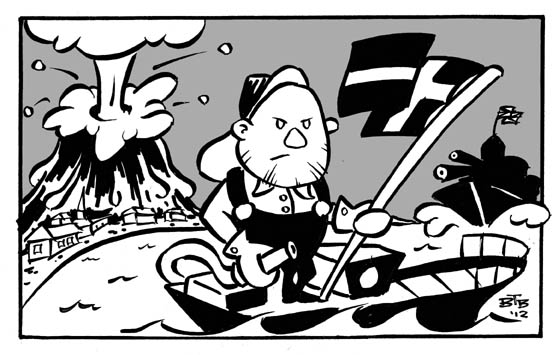
The Second Sunrise

Illustration from Razorcake #67 by Brad Beshaw

Illustration from Razorcake #67 by Brad Beshaw

It doesn’t really matter why I was in that bar just past noon on a weekday. Whatever reason I give will just be an excuse for living out a self-destructive life. I don’t know what that guy was doing in the same bar at the same time. He probably had a different excuse.

We were more or less the only two in the joint. There was a bartender. She sat as far away from us as possible, reading some glossy magazine full of celebrity gossip. There was a television, too. It flashed lights and people on it talked about something we were supposed to care about—sports or politics or something. At least the volume was low enough to ignore.

I’m not sure what that guy said to get us started talking, but I was okay with it. I like talking to strangers. I like hearing their stories. I didn’t expect much out of a skinny, middle-aged, white dude nursing beer in a bar called Bunhuggers. But what the hell? I might as well listen to something.

The guy told me a story that I’ve carried with me ever since. It’s like a lucky stone in my pocket. The oil from my fingers seeps into the pores of it. I’ve long since rubbed it smooth.

 *

The guy was in the National Guard in the seventies, he told me. His father had known some people and pulled some strings so that, when his time came to serve, he didn’t have to go Vietnam. Instead, he signed on with a crew of medics stationed somewhere in the northeastern United States. It was an easy gig until they got sent to Iceland.

This was in late 1972. The navies of Iceland and Great Britain were perched on the edge of open hostilities, about to start shooting each other over cod. See, Iceland is an island mostly composed of volcanic rock. The soil is far from fertile. Winters are long. Farming is tough. The rest of the island isn’t exactly overflowing with natural resources. There are a lot of fish around the island, though. A lot of Icelanders make their living as fisherman. A lot of Icelanders’ diets are seafood heavy.

In the early seventies, that fishing industry was threatened, mostly by fleets coming over from the Soviet Union. Russian trawlers were dropping big nets into the ocean near Iceland, scraping up everything in their path—fish, vegetation, rocks, entire ecosystems—and dumping the whole catch into the freezers of their factory ships. It was devastating Iceland’s way of life. In response, the Icelandic government declared that the ocean within a fifty-mile radius around Iceland was an “exclusion zone.” No one could fish in it except Icelanders.

The Icelandic navy attacked anyone who violated this exclusion zone, but their attacks were non-violent (unless you’re one of those people who interpret the destruction of property as violence). The navy would charge fishing boats and cut their nets with sharpened grappling hooks. The nets would drift harmlessly to the bottom of the ocean. The crews would turn and head back to their home port. Fishing nets were expensive. Fleets were likely to continue losing the nets on subsequent trips, so most fisherman recognized Iceland’s exclusion zone and went somewhere else to catch their cod. The only fishing boats that kept coming were British fleets.

It was all about fish and chips. It’s a British staple, part of the whole cultural identity. They had to get the cod for the fish and chips somewhere. Iceland was that somewhere. So Great Britain sent a couple of battleships into the exclusion zone to protect the fishing fleets. The Icelandic navy responded by cutting the nets off the fishing boats. Great Britain threatened to attack with their battleships. The Icelandic navy—which, keep in mind, was not a heavily-funded navy; it was mostly just little fishing boats rigged with whatever guns were handy—fired a warning shot across the bow of the battleship. It was David showing his slingshot to Goliath. NATO stepped in before things escalated.

The dude from the bar was part of the NATO forces. He flew into Reykjavik with the rest of his unit. They sat around eating cod for a few weeks while the British battleship and Icelandic gunboats looked down their scopes at each other and diplomats tried to find a way to keep them from shooting.

This was wartime for the privileged white sons of upper-middle-class America.

Then things exploded. Or, to be more specific, Helgafell and Eldfell exploded.

Helgafell and Eldfell were volcanoes thought to be dormant. They sat on the little island of Heimaey, just off the southern coast of the main island of Iceland. A seam had developed on the edge of the volcanoes, running through both of their cores. Lava and ash began to actively flow. The problem with this was the little fishing village of Vestmannaeyjer, which sat about a mile away from this now-active volcano. About five thousand people lived in Vestmannaeyjer. The dude and his National Guard unit were sent in by helicopter to evacuate them.

The dude flew in at daybreak. What he took at first to be the sunrise was actually the volcanic seam erupting. The sun crept up minutes later, farther south. The helicopter flew between the two sunrises, into Vestmannaeyjer. Only, when they got to the town, many of the locals refused to evacuate. This was a remote village on a remote island in a remote country. If the villagers got on the helicopters, they would leave behind everything. Their homes, all their possessions, their whole village, would be swallowed by the volcano. There’d be nothing left. And where would they go, then? The same lava and ash would have the same effect on the homes and possessions of all of their families and friends. So it wouldn’t just be a case of individuals losing everything. It would be a case of individuals and everyone they knew losing everything. So they decided to stay and fight the volcano.

Of course, they had no established plan to fight the eruption. How do you put out a volcano? Spray water on it?

Well, this is exactly what the villagers did. They rigged up water pumps and hoses and pipes—all told 43 pumps and over 19 miles of pipes and hose—starting at the harbor and stretching into town. They dipped one end of their fire hoses into the Atlantic and pumped that water through the pipes and hoses. Some crazy villagers stared down the lava flows, spraying water on them. Of course, they knew they couldn’t put out the volcano the way you put out a fire. The idea was to cool enough lava to build a rock barrier at the edge of town. This way, the lava would bank off the barrier and flow down into the uninhabited parts of the harbor.

The dude and his buddies in the National Guard thought this was madness. They took what evacuees they could back to Reykjavik, left them in makeshift shelters, and flew back into the sunrise that lasted all day. The villagers kept at it for days, working in the air thick with burning ash, turning lava into rock. They didn’t stop until they’d redirected the flows into the sea. It took them more than 8 million cubic yards of ocean water to do this. When they were done, about two-thirds of the town was saved.

The other third of the town was buried in what was by now rock. The dude walked down the street, past roof tops setting on the new ground. He tripped over the top of a stop sign, now only ankle high. He had no idea how to make sense of what he’d just seen.

*

This was the story the dude told me in Bunhuggers. He didn’t tell it the way I just did. It took a lot of time for me to get all the details. I wanted to believe him, but to do that, I had to ask dozens of questions, get him to fill in all the details of a standoff between Iceland and Great Britain, of rigged up fire hoses and the motivations that drove that courage or madness or whatever you want to call it. I was fascinated when he told the story. When he was done, though, I was mad and a little sick.

 *

Years later, I told the story to Heela and Shahab from Geykido Comet Records. We were at a show in LA, chatting between bands. Heela wanted to know if the story was true, if there really was a standoff between little Icelandic fishing boats and a British battleship, if a village really did stand up to a volcano. “I don’t know,” I told her. “I never looked it up because I’d be too disappointed if that dude was lying.”

Heela was more courageous than me. She did a good ol’ Google search, then sent me an email that said, “I would have kept this a secret if it weren’t true.” And, sure enough, both events occurred in 1973. A dozen websites and a National Geographic article will attest to it.

Shahab took a more critical approach to the story. He said, “You should write that story, only take yourself out of it.”

My apologies, Shahab, but now I’ve written that story. I kept myself in it. I even dragged you in it with me.

See, carrying this story around as long as I have, it’s become mine. Not that I’ve ever been to Vestmannaeyjer and seen the chimney tops that could bruise my shin, not that I could have possibly been in Iceland in 1973 and been a part of this whole scene. But when that guy told me that story, it changed me a little. It forced me to consider what I really valued in this life. I knew then and know now that there’s nothing I would stand in the face of a battleship to protect. But what about my way of life? What about my life and village and family and friends and community? Could they possible be less valuable to me than they were to the people in Vestmannaeyjer? If they aren’t less valuable, then what was I doing drinking alone at noon in a shitty bar? Is there a constant threat of eruption above me, in places that I thought were dormant? Does metaphoric lava forever flow toward me? Does it mean anything?

I carry this story around with me not because I’ve found the answer to these questions, but because it forces me to ask them.

Author’s note: This is the second chapter to a collection of Razorcake columns I wrote.  It originally ran in Razorcake #67.  For more information about the collection, read this post.
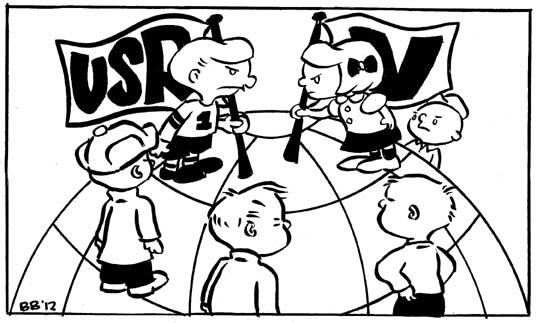
Same Thing We Do Every Day: Try to Take Over the World

Illustration from Razorcake #69 by Brad Beshaw

Illustration from Razorcake #69 by Brad Beshaw

The Beatles song “Back in the USSR” played over the speakers at a gas station. Maybe because the car stereo was broken and we were taking this trip without tunes, I was susceptible. I can usually block out the music in public places. Even when I can’t, I keep certain catchy songs in my mind. This way, if I hear something I don’t like, I play the catchy song I do like in my head and get the other one out of it. It’s a good trick for fighting the tyranny of store stereos. But my defenses were down. “Back in the USSR” rode an earwig into my brain and got stuck on repeat there.

I’m not a Beatles fan. I could live a happy life without ever hearing another Beatles song. I doubt that I’ve ever listened to them voluntarily, though I know all the words to dozens of their songs. My parents were big Beatles fans. They played the hell out of a two-volume Greatest Hits album. They had it on eight-track, and because it was a double album, I spent much of the early eighties hearing all sixteen tracks of this collection. “Back in the USSR” was on it. Hearing it again after years of avoidance, getting it stuck in my head, sent my mind down a long-abandoned neural trail to a memory that came from another world.

 *

Somewhere around 1981, I was in an elementary school program called “Gifted.” It was set up for kids who did well on an “intelligence” test. I put gifted and intelligence in quotes because something had to be wrong with that test. Only white kids tested into Gifted. Originally, only white boys tested in. After one year, a couple of girls passed the test and joined us. Us boys were not happy about this development, especially considering the cootie epidemic that had run rampant through our elementary school for years. We became more accepting of the girls, though, as we got older and closer to puberty.

Even though more than a third of the students at my elementary school were African American, no black kids were deemed gifted. This suggests to me that either there were no intelligent black kids at my elementary school or that the intelligence test was designed to privilege the experience of one race of kids while denying the experience of another race. You pick which option aligns more with your world view.

Us gifted kids were bussed to another school on Fridays. We took a variety of classes there. The class sizes were smaller. We got to choose what we studied. We were taught by teachers who had worked their way into the gifted program, who had paid their dues and won their awards and earned a spot teaching a small group of motivated, studious, well-behaved kids. It was the best part of the week for us.

In 1981, I signed up for a gifted course called “World War.” It was mostly a geography class. Our teacher explained on the first day that we would form groups of four. Each group would create our own country. We’d name our country, decide who in the group held which office, amass points based on the work we did over the course of the semester, and, at the end of the semester, battle other countries with our points. Whichever group won those battles ruled the world. I teamed up with three other white boys and ran for president of our little country. I won for a couple of reasons. Maybe the biggest reason was that I was the only kid in the class who had to learn how to fight growing up, so while I certainly wasn’t the toughest kid in my elementary school, I was the toughest kid on the gifted bus.

I know that being the toughest kid in Gifted is like being the smartest kid in the dumb class. Fuck it. I got to be president, anyway.

We wanted to name our country the USSR. Not because we were budding Bolsheviks. Because we grew up near Kennedy Space Center during the Cold War. For us, USSR would stand for the United States Space Race. We were reclaiming USSR for ourselves, for America. Our teacher, whose name wasn’t Mrs. Arrien but I’m going to call her that because it sounds just right if you read it out loud, told us we couldn’t do it. We dropped the “States” and became the United Space Race. One of us got cracking on the logo immediately.

Since it was essentially a geography class, our country earned points by doing projects on foreign countries. We’d have to write reports on where other countries were, how they made their money, who their leaders were, what their culture was like, and things like that. Luckily, we had one boy in our group who was really into that kind of thing. For some reason, he loved to write and research things. While most of the group goofed off in the library, this one kid actually read all about different countries and wrote a bunch of reports. He didn’t just use the encyclopedia, either. He asked the librarian for help and found a bunch of books. He read them and took notes. He wrote stories set in those countries for extra credit. Mrs. Arrien also gave him props because he was the only kid in the class who could answer the question, “What are the customs of Germany?” correctly. The rest of the class had just assumed that Mrs. Arrien had forgotten the “e” on costumes. They talked about lederhosen and shit.

Now, was this geeky kid who did all the work for the USR the same geeky guy writing this column?

You bet.

I’m still fascinated by geography. I often read books in translation, study the news of the world, and embarrass my wife when she introduces me to her Bulgarian friend and I start talking about Hristo Stoichkov and my desire to travel to Sofia someday. I can even tell you the names of the leaders of faraway, exotic places like Canada. It’s the Right Honourable Pierre Trudeau, right?

So anyway, as president of the USR, I pooled all my brainiac strength. Our country amassed a point arsenal that was nearly enough to overpower all the other groups in class at once. The day came for our world war—the whole point of the class. Mrs. Arrien explained the rules. Two countries would face off. Each country would bring enough points to the battle to win. Whichever country had the most points won the battle and kept all their points. Whichever country lost had to sit quietly and sulk like a bunch of losers. The residents of the USR were cocky. We knew we had way more points than the other groups. We brought all our points to the first battle. The other country, the Jedi, were quaking in their boots. We knew we’d destroy them because they weren’t even smart enough to name themselves something cooler, like the Rebel Alliance or something. We laid our heavy load of points down on the table and said, “Bring it on.”

Mrs. Arrien asked us if we were sure we wanted to do that.

As President of the USR, I said, “Of course.”

Mrs. Arrien said, “Countries can form alliances. They can team up, pool their points, and defeat more powerful countries. You know that, don’t you?”

No. We did not know that.

And now it was too late to change. All of the other countries had seen how many points we had. It was almost, but not quite, three times as many points as the other countries had. So the Jedi teamed up with the Islanders (named after Merritt Island, the town we all lived in) and Vader (named after the disposition of their evil leader). They found enough points to beat us. The USR, my presidency, ended there. My other group mates cursed me. The failure was all my fault. I pointed out to them that I was the one who earned all the points, anyway. “Fat lot of good they did us,” someone said. I was sunk.

Angela Whitman, the president of Vader, outplayed the other two countries. While they were pooling their points, she casually asked each group how many points they each had. The other kids hadn’t quite figured out that the key to winning the game was to not let anyone know how many points you had. They spilled the beans to Angela. After the three of them defeated the USR, Angela allied Vader with the weakest country (the Islanders). Together, the took over Jedi. As soon as they did, Vader turned on the Islanders and crushed them. For the rest of that class period, Angela Whitman ruled the world.

I sat in the corner and wore a funny hat. Maybe not literally, but that’s the way I remember it.

 *

A few decades later, driving north up Highway 101 with “Back in the USSR” lodged in my brain the way a torn fingernail gets lodged between your teeth, I thought back to my old presidency. I’d like to say that Angela Whitman went on to become the corporate raider that World War taught her to be, but she didn’t. She got pregnant the summer after high school. Last I heard, she was still a stay-at-home mom. I didn’t use her real name in this story because I didn’t want anyone looking her up on Facebook and seeing the pictures of her youngest daughter graduating from high school. At least that’s what I assume you’d see. I don’t have a Facebook account. I can’t see who from my childhood got fat, who hates their job and always posts that it’s humpday on Wednesdays, who’s divorced and trolling, or who “likes” what. I’m in contact enough to know, though, that no one from the old gifted days amounted to much. Our training in taking over the world never really panned out. Just as, fifteen years ago, I came to terms with the fact that I’ll never be a professional athlete, I can now come to terms with the fact that I’m too old to start on a path toward dictatorship and world domination. It’s okay. I wouldn’t want to be a pro athlete or a tyrant. I’m okay being who I am.

I wonder, though, about the long-term effects of my upbringing. Obviously, classes like World War and programs like Gifted taught some troubling values to me as a little kid. They instilled in me an ideology of tyranny and white supremacy before I was old enough to do much critical thinking. My defenses were down. I wonder how much of that ideology is still stuck in my mind like a silly Beatles song.

And, because my childhood wasn’t unique for a kid in America, I wonder how much the ideologies are stuck in all of our minds.

Author’s note: This is the first chapter to a collection of Razorcake columns I wrote.  It originally ran in Razorcake #69.  For more information about the collection, read this post.

Mythologies for the Marginalized

I gave birth to an ugly baby. His name is Razorcake. He comes around every two months. As one of his two biological parents, I still beam every time I see the ugly little bastard.

sean_illo_60_by_brad_beshaw

Illustration from Razorcake #60 by Brad Beshaw

Sure, we got parenting advice along the way. “Give him some color,” people told us, but we raised him to have muddy, black-and-white pictures on inky newsprint. They cried, “Put in a letters section.” But, no. If our readers want to have their say in print, they either have to take the time to write a feature for the magazine and submit it, or they have to start their own zine. Distributors kept telling us, “Put photos of sexy young punk girls in the magazine, especially on the cover.” We didn’t. If any scantily clad bodies showed up on the cover, they were sweaty, fat men who repelled more readers than they attracted. Razorcake giggled with us when those distributors went out of business, and he was still around, ugly and inky and obstinate as ever.

The biggest advice I heard was that I’d outgrow Razorcake, that I couldn’t put out a punk rock zine forever. And I’ve grown, sure. I’ve gotten older and grayer. I’ve held a day job for almost a decade, now. I got married. I no longer spend my days among the swarms of termites in a rundown two-bedroom apartment in Highland Park, turning up the music to drown out the sounds of ghetto birds and gunshots, putting together the latest issue of Razorcake. We moved Razorcake Headquarters to a basement a few blocks away. It’s much nicer. No one’s car gets tagged when they come to visit, anymore. A middle school works as a shield between the HQ and the gang activity that used to surround us. And, as for me, almost all of what I used to do has been taken over by volunteers. Let’s face it: they do a better job than I ever did.

Still, rather than me outgrowing Razorcake, it seems to have grown up with me. I’d say that about punk rock, too. When I was a kid and still listening to the Sex Pistols without irony, I believed Johnny Rotten when he sang about us having no future. I internalized it. I never could’ve imagined how far punk rock would go and how far I’d go with it. I didn’t realize how empowering the do-it-yourself ethos could be. But when I got frustrated with the mainstream media, I knew I could start a zine that countered it. When book publishers seemed to be rejecting my favorite writers from the punk rock underground, I started a new publishing company designed to give these writers a voice. When the scene around me got stale, I set up shows and readings and sometimes even tours. I stayed involved. Rather than outgrowing punk rock, I learned to develop a way of looking at the world that comes from spending much of ones adolescence and all of ones adult life immersed in punk rock.

I think we all have a lens through which we see the world. We construct an ideology, of sorts, and it brings into focus the events and cultural stories that surround us. Because my day job sees me teaching English at a state university, because I have a doctorate in literature and criticism, I’ve been trained to call this lens or ideology “theory.” I recognize that, over the past twenty years or so, I’ve developed my own punk rock theory. And, like a true parent, I’ve thrust this theory on my ugly little child, Razorcake.

My biggest contribution to raising Razorcake these days is my regular column. It’s titled “A Monkey to Ride the Dog.” Regardless of what’s been going on in my life, regardless of how busy or broke I’ve been, beyond anything else I’ve sought to accomplish or do with my life, I’ve sat down for several hours every two months and written a column for Razorcake. I give those several hours priority despite everything. Sometimes, this seems ridiculous to me. These columns are just eighteen hundred words for a punk rock rag. Most likely, my audience is taking a dump while he or she reads my column. And mostly the columns are simple stories from my life. Often, they don’t address punk rock directly. Sometimes, they don’t seem to have a point at all.

Collectively, though, these columns provide a way of looking at the world beyond the typical mainstream stories that clutter our lives. They are, in a sense, a punk rock theory.

One of those great books that English professors like me like to read and reread is a collection of essays called Mythologies by a guy named Roland Barthes. Mythologies gathers up columns that Barthes wrote for a literary journal in the 1950s. Barthes applies linguistics to popular culture. When I read it, I’m struck by how each essay, when taken on its own, seems to be dated and maybe even a little irrelevant. I like that he’s talking about, say, professional wrestling and linguistics, but the professional wrestling he discusses has nothing to do with the pro wrestling I’m familiar with today. Instead, what makes the book so powerful is that, after reading all these essays about a pop culture that doesn’t really exist anymore, I’ve learned how to look at popular culture today through Barthes’ eyes.

In a sense, this is what I hope to do with A Monkey to Ride the Dog as a collection. It’s a kind of Mythologies for people who still like their music fast and loud. I don’t think these essays are dated. They will be in fifty years, sure. For right now, they’re okay. They discuss a world we can recognize for at least the rest of this generation. And when these essays are taken together, hopefully they’ll help you, as a reader, to see the world through one punk rocker’s eyes. Hopefully, they construct a punk rock theory that may be useful as you get old and gray like me, as you move into the world of middle age but still search for a way to reject the incessant and vacuous culture that consumer capitalism thrusts down our throats constantly.

Author’s note: This is the introduction to a collection of Razorcake columns I wrote.  I wrote this originally sometime in 2012.  For more information about the collection, read this post.
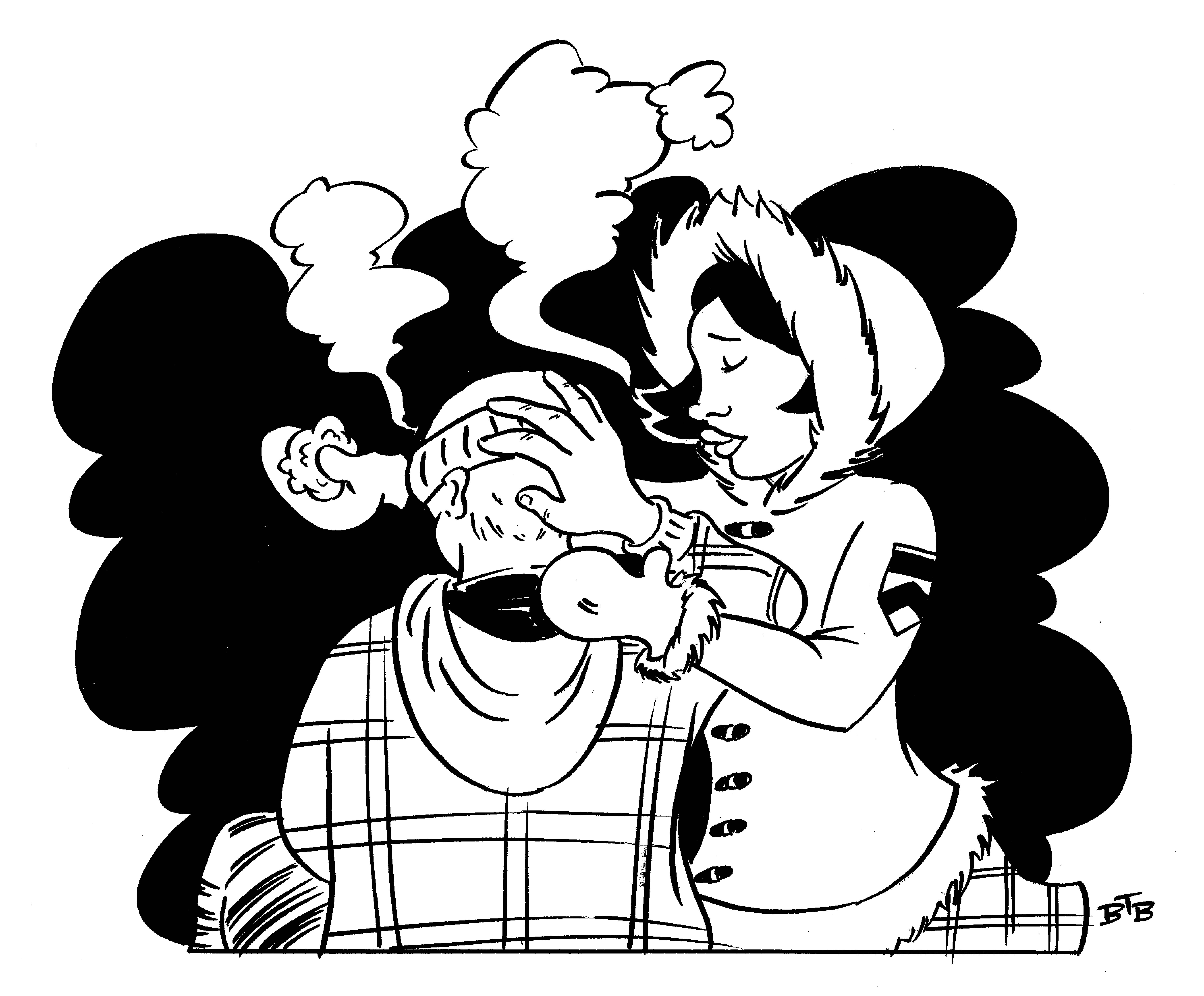
A Monkey to Ride the Dog

sean_illo_45_by_brad_beshaw

Illustration from Razorcake #45 by Brad Beshaw

I recently submitted my eightieth column for Razorcake.  It seems incredible to me.  Eighty columns.  One every two months for thirteen years, four months.  For a punk rock zine.  Weird.

On the other hand, I feel differently about my Razorcake columns than anything else I write.  They are the only things I reread once they’re in print.  Or, I guess I should be more specific.

When I write novels or short story collections, I’ll read specific chapters or sections from the book after it’s published.  I’ll read these sections for a reason, though: to prepare for a performance or to fact check something.  I’ve never read one of my books all the way through once it was in print.

When my short stories run in literary journals, I frequently read everything in the journal except for the story I wrote.  When I write reviews or essays for various publications, I never look back over them in print, mostly because I revise short stories, reviews, and essays so incessantly that one more reading of the piece seems excessive.

But the Razorcake columns: I reread those just for fun.  Every two months, there comes a time when I’ve read the rest of the issue and I’m not ready to wait for the next one, so I sit down and reread my column.  I love those moments.

A couple of years ago, I decided to put together a collection of my favorite columns and submit it for publication as a book.  I went back through the first twelve years of columns, picked my top twenty-six, and wrote an introduction so that they’d make sense as a whole.  I intended to send it out for publication.  In fact, I did send it to an editor I know who works at a publishing house I respect.  He told me that he loved the columns individually, but when you put twenty-six of them in a book, it doesn’t work.

I felt pretty much the same way.  I was ambivalent about even sending out the collection.  When an editor I respected echoed my feelings, I decided to shelve the collection.

The columns were meant to be read one at a time.

With the eightieth column, though, I decided to unearth the collection and post it here.  Not all at once.  That doesn’t work.  Twenty-six consecutive columns is overwhelming.

Instead, I’ll post one column every other Tuesday.  This will start next Tuesday.  When they’re all live, I intend to return to this post and create a series of links so that you can find the whole collection in one place.

A note on the columns:

The columns in this collection are arranged in a more or less chronological manner according to when the events in the column occurred (not when the column was written). Outside of changing a few things we missed in the first round of proofreading, the columns are the same as the ones that ran in Razorcake. I edited nothing from the perspective of an older and wiser writer. I chose not to include several early columns because the best of them ran in my collection Glue and Ink Rebellion. I’m slightly ashamed of the poor quality of the rest of them. For that reason, most of the columns in this collection ran in Razorcake between 2005-2012.

If I thought that the real people involved would be embarrassed or put out by what I wrote, I changed their names. If I thought they’d be stoked or apathetic about their inclusion, I kept their real names. All of the stories are true inasmuch as any story can be true. Like anyone, I created somewhat arbitrary starting and ending points and left out details I thought would be irrelevant. Beyond that, these are the events as I remember them.

Pam Houston’s Ukulele

thin air 20For a few years, I’ve been writing stories about some of my favorite writers and their metaphysical ukuleles.  They’re all fiction, but based on true stories.  My most recently published one pays homage to Pam Houston, author of Contents May Have Shifted and Cowboys Are My Weakness.  It has been published in the literary journal Thin Air.  They made me the “featured writer” for the issue and posted the complete story to their web site.  You can read it here.

Also, I’d like to point out that the journal itself is very cool.  The other featured author is poet Jim Simmerman.  Jim was a hell of a poet and a guy I always liked to spend time with.  I’m honored to share this tiny little spotlight with him.  I encourage you to support Thin Air, if you can.

This is the fifth ukulele story I’ve had published in the past year and a half.  As far as I know, it’s the only one you can read online.  The other four are:

Jack Kerouac’s ukulele in The Rattling Wall.
Raymond Chandler’s ukulele in VLAK.
Flannery O’Connor’s ukulele in 14 Hills.
Herman Melville’s ukulele in Fjords Review.

Fjords lists the Melville story as an “essay.”  I assure you it’s not.  It is based on a ton of research I did on Melville, but I also made a lot of it up.  I haven’t pointed out the mistake to the folks at Fjords because I feel like I suckered someone over there, and I like that feeling.

In case you’re wondering, there are seven more ukulele stories written that I haven’t submitted for publication.  I plan to finish revising those, then send the whole thing out as a collection sometime this summer.  In the meantime, I hope you enjoy my little tribute to Pam Houston.

The CIA in Your Brain

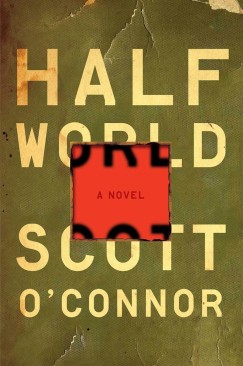
half-world-243x366From the early 1950s to the early 1970s, the CIA ran a mind control program that included hiring prostitutes to lure johns into “safe houses” where government agents imprisoned and drugged the johns to see if they could brainwash them.  LSD was their drug of choice.

It’s crazy to think about.  It’s also a fairly well-known part of Cold War American history.  The program was called MKULTRA.  If you want to fall into a rabbit hole, do a web search of it.

I don’t really want to fall into that rabbit hole or send you there.  I only bring it up because I recently read and reviewed a novel that was set against the backdrop of MKULTRA: Scott O’Connor’s Half World.  My review posted on the main page of the Los Angeles Review of Books today.

One of my favorite things about the LA Review of Books–both as a reader of it and as a contributor–is the freedom they allow their reviewers.  Reviews blend into essay territory, covering not only the book in question but the larger issues surrounding the book’s ideas.  I like that, in a world where books seem to be viewed more and more as commodities, LA Review of Books treats them as they should be: a place for ideas to be nurtured, to flourish.

Anyway, before I wander off to far on that tangent, I’m going to give the link to my review, then get on with my day.

Herman Melville’s Ukulele

Back in 2009, I sat in a diner in New Mexico with nothing to do.  The kitchen wasn’t prepared to deal with the sudden flood of patrons.  The waitress told me that my food would take about an hour to get to me.  I had a solid-wood Kamaka ukulele in my truck.  It was morning, but also summertime in the desert.   I figured the uke would be fine.  The day was early.  I’d be out of the diner and my truck’s air-conditioner would cool the ukulele before the day’s heat really set in.  Still, I had the ukulele on my mind.

Melvilles_Uke

I also had Melville on my mind because I’d just finished classwork for my doctorate.  The last class I took was on Melville.  I love his fiction.  His biography is pretty compelling as well.

In my boredom, I took out a notepad and started writing a story about Herman Melville and his ukulele.  Of course, Melville died before the first ukuleles were brought to Hawaii.  I didn’t care.  The beauty of fiction is that it can transcend the tyranny of clock time.  Or, put another way, I love fiction because I can make up whatever I want.

Anyway, my Melville ukulele story ran in a recent issue of the literary journal Fjords.  For a short time, Fjords is making the journal free for electronic download.  If you want to check out the story and the rest of the journal, you can download it here.

Also, I’ll offer a little warning about the story.  Whoever typeset the journal made a mistake on the page break.  The title for the poem that is supposed to begin on the page after my story ends has become the last line of my story.  In my copy of the journal, I just used a little Wite Out.  I can’t do this digitally, so you’ll have to do it in your mind.  The story is supposed to end before the words, “Just to See What it Was Like.”

Oh, and finally, that above picture of Melville playing a uke is absolutely authentic.

Saturday Night at the Harbor

My brother-in-law Felinor had a heart transplant last January.  When he got out of the hospital, he came to live with Felizon and me.  We were his primary caretakers.  I spent more time in 2013 with Felinor than I did with anyone else, and vice versa for him.

He didn’t make it a full year on his new heart.  He passed away on Christmas Eve, 2013, at the age of 46.

Felinor was a junior.  His father, Felinor Sr., passed away on November 10, 2013.  It was  a tough year.

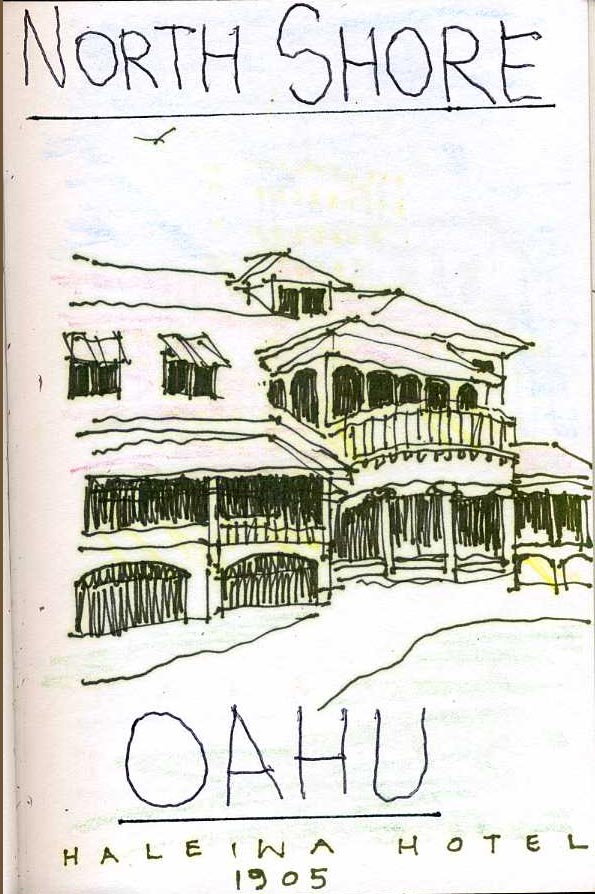
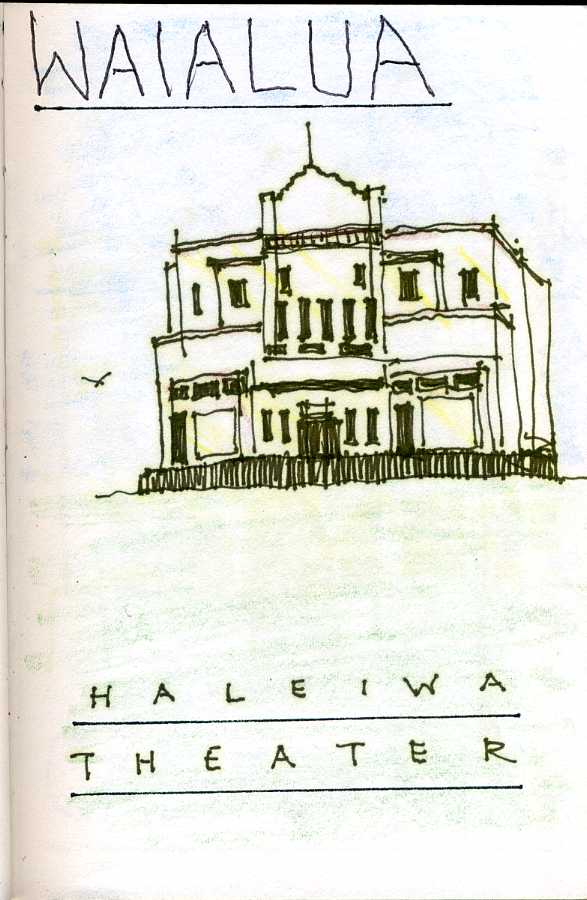
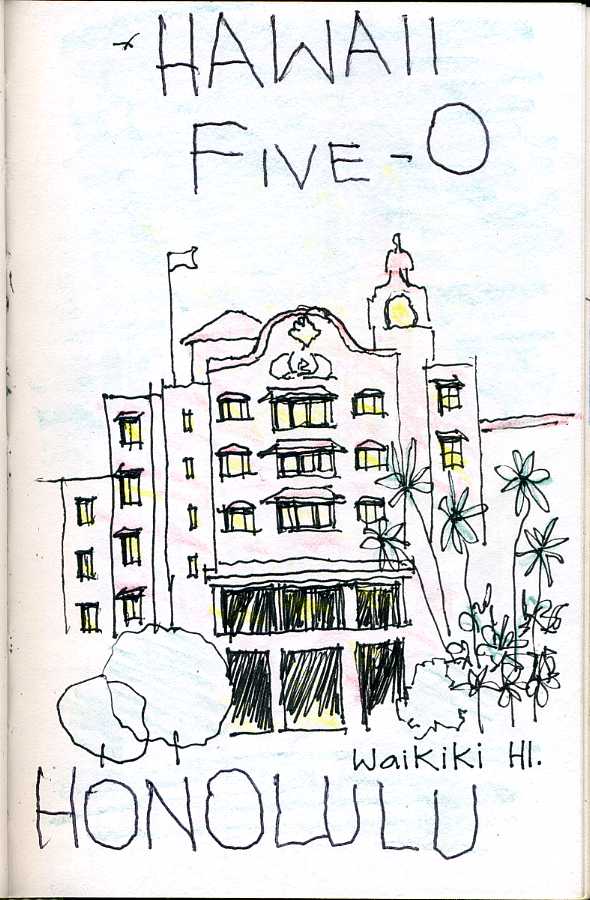
As I was picking through the last few possessions Felinor left behind, I remembered a story I wrote about going to Hawaii in 2000.  It was the first time I’d gone to the state, met Felizon’s dad (Felinor Sr.) and her brother (Felinor Jr.).  The story is part of my collection Glue and Ink Rebellion.  In honor of the two Felinor’s who I won’t get to spend time with in 2014, here’s my old story as it ran in the book.  The illustrations come from Felinor Jr.’s sketch book.

Felinor_Oahu Sketch001

Saturday Night at the Harbor

I went to Hawaii, which is strange for someone of my economic class, especially considering that I’m neither part of the armed forces nor a member of the merchant marines. Before going, Hawaii occupied a vague recollection in my mind of an un-air-conditioned Florida junior high school classroom where the underpaid teacher had snuck outside for a fifteen-minute smoke break in the middle of class. Two redneck kids fought in the back of the classroom. They woke me up and kept me up, so I sketched pictures of waves from Surfer magazine, pictures of guys like Gerry Lopez dropping in on the pipe while riding twin fin, Lightning Bolt boards.

I waded through those junior high days reading comics in Gifted English class, learning about Columbus’s discovery of America and the fairly recent American victory in Vietnam, and trying not to get involved in the myriad daily fights, (mostly between the north Merritt Island trailer park kids and the central Merritt Island ghetto kids, but often spilling over into the more easily defined categories of black versus white, which made it more dangerous for me, seeing as how my skin was more or less one of those colors). I’d also learned to surf during my seventh grade year, and I dreamed of spending the upcoming summer surfing, all the while knowing that I’d spend that summer working construction. Concrete classroom walls seemed to sweat and the laminate desktops swelled and cracked in the heat, and I thought of Hawaii, where every girl looked like the models in an OP ad, where every surfer got a chance to slip into an overhead barrel. Where someday I’d land.

Eighteen years out of the seventh grade, I still dreamed of spending summers surfing, still knew that rent was a precarious sum to generate monthly without at least the occasional day of construction labor in the Florida sun (master’s degree be damned). I was a part-time community college English teacher who could barely muster up the energy to pass out comic books to my students, who felt like I was giving the college too much for their money if I actually taught, and I was well below the tax bracket of people who summer in the Pacific Islands (though I was seated comfortably in the tax bracket of people who qualify for food stamps). For more or less five years, my girlfriend Felizon put up with my daydreaming passivity until, finally, she put up enough money for both of us to go back to her hometown on the North Shore of Oahu.

Felizon and I spent ten days exploring her home state of Hawaii. I finally met her father, who filled me with endless stories of a life laboring for the sugar cane plantation, of a long lost civil engineering degree from a university in Manila, of cock fights in Mill Camp, of raising five children, and of his struggles saturated in forty years of heavy drinking. He also let me drive his hot rod Pontiac Grand Prix. Of course, he was my kind of guy. Felizon’s parents fed us more Filipino food than we could possibly digest and more stories of Filipino culture than we could possibly learn. In times away from her childhood home in Paalaa Kai, Felizon took me around to the Hawaiian microcosms of the Philippines, Korea, Japan, and China. We took pictures of Japanese tourists taking pictures of King Kamehameha’s statue. We wandered through botanical gardens and hiked up to a waterfall under the light of the full moon. We made friends with a six-year-old girl with leukemia. We snacked on all kinds of local foods: kal bi, manapua, poi, kalua pork, lomilomi salmon, and dinadaraan. We listened to a Tongan master drummer and watched Tahitian girls dance. We tried to avoid everything typically mainland American, especially the tourists, and got frustrated when we couldn’t.

But this isn’t a vacation story. I have a point.

We spent our first, second-to-last, and last night in Hawaii hanging out at the harbor in Hale’iwa with Felizon’s brother, Felinor, and his friends. The first night, when Felinor told me that he and his friends hung out at the harbor and drank juice, I guessed that he was using “juice” as a euphemism. He wasn’t. They really did hang out in the parking lot of Hale’iwa Boat Harbor, drinking Hawaiian Sun Orange Lilikoi or Strawberry Passion fruit juice, staring across the calm harbor waters and out to the ocean, “talking story.”

The first night when I hung out at the harbor, I really enjoyed myself and couldn’t fully understand why. The slow pace was just right for my travel-fatigued state of mind, the ocean had a soothing glassiness, and Felinor and his friends told pretty entertaining stories. At first they were somewhat guarded towards me (except Roy, but we’ll get to him later). Maybe it was because I was a “haole” from the mainland (and haoles from the mainland tend to be loud, obnoxious bastards), maybe it was because I had been dating one of their friends’ kid sister for five years without giving her even an engagement ring (which I gathered is a bad thing in the eyes of a local boy). Probably it was a combination of both. Either way, I didn’t let it bother me. I listened to their stories and joined in when it seemed necessary and didn’t worry too much about winning them over. I left looking forward to meeting up with them again.

The second-to-last night, Felizon and Felinor wandered out of earshot to catch up on personal matters. Roy and I stayed in our seats and talked story. Roy is an easy guy to get along with. He’s a native Hawaiian right down to the blood in his veins, and he has a humble confidence that makes him a friend right away. He told me a bit about his love life and a bit about the waves during the winter and a bit about growing up with Felinor, then he stopped in the middle of one sentence and said, “Do you hear that?” I listened. A four wheel drive truck turned out of the gravel harbor parking lot. Faint traces of reggae filtered over from Hale’iwa Joe’s; the voices of kids partying at the other end of the harbor drifted over. Other than that, I heard nothing. Roy said, “I think there’s waves.”

I figured that he was pulling my leg, even though he didn’t really seem like the leg pulling type. We kept talking. Ten minutes later, I heard it. There were waves. At midnight, I left the harbor with plans to meet Roy at six a.m. for a surf session.

Though I surf often, I’m not a surfer. I’m nothing like Jeff Spicoli or like the blonde, arrogant, in-crowd stereotype. I never have been. I rarely hot dog or ride a short board. I generally paddle out where the waves are a little smaller but at least they’re less crowded. By the same token, although I’m not a surfer, surfing is very important to me. When I surf, I tend to forget my problems, but when I’m done surfing, I tend to understand my problems better. It’s like hypnotherapy, I guess, only surfing is really fucking fun.

Surfing with Roy helped me in this way. The waves weren’t the monsters that the North Shore is famous for. On my way to meet up with Roy that morning, I’d noticed that Waimea Bay was flat. The Pipeline was flat. Five guys fought for every ripple at Sunset Beach. But none of that mattered to me. Roy and I carried longboards across the street from his house and surfed clean, waist-high waves. We were the only ones out. Set waves rolled in every five or ten minutes. At first, we caught a bunch of waves. One other surfer paddled out. We made another friend. A sea turtle fed off the reef that we surfed above. Rain clouds cast long morning shadows across the Waianae Mountain Range all the way down to Kaena Point. A couple of times, Roy caught me staring at the mountains and kidded me. Hell, I’m from Florida. All I get to see when I look back at the shore there is pink condominiums blocking out the sunset. Roy surfed in the classic longboard style of his father and grandfather. He coolly strolled back and forth on his ten-foot longboard, staying right atop the redwood stringer, calling out the ghosts of Duke Kahanamoku and his gang. I rode his twelve-foot longboard. It forced me to give up my lingering short board tendencies, to swing big bottom turns and run feet up to the nose. I adapted quickly.

When I left the water, I came to understand something about the harbor, about Hawaii, about haoles, about cultures lost and cultures gained.

Felinor_Oahu Sketch002 My hometown is a shell of what it used to be. The Merritt Island culture of my childhood is gone, stripped away and replaced by Chili’s, Office Depot, and Wal-Mart Supercenter. The last bit of wetlands on Merritt Island has recently been dredged up to make way for a BJ’s Wholesale Outlet. The loss of this hometown is a major theme of my first novel.

My heritage is a shell of what it used to be. Although I know I’m of some kind of European descent, I don’t know what part of Europe I descend from. Sean is an Irish name, but that doesn’t make me Irish. For all I know, Carswell is just something some guy on Ellis Island made up. I know my family didn’t come over on the Mayflower. I know I’m not indigenous to Florida. The constant sunburn and burgeoning skin cancer proves that. Locals in Hawaii make no distinctions between the heritage of white people. White people are all haoles. As far as I could tell, the only distinction is whether or not you’re a fucking haole. A fucking haole is a white person who has benefited enough off of the American Wal-Mart Supercenter economy to be able to afford to vacation in Hawaii, but spends his whole time bitching about the lack of bagels and Starbucks (though there are plenty of both in Hawaii). I probably despise fucking haoles more than most. My years of building houses for fucking haoles (combined with my loss of culture and heritage) has led to a personal class grudge that’s probably deeper than the one carried by most local Hawaiians.

The local boys at the harbor, though, made distinctions between every Asian and Pacific Island ethnicity. They knew the stereotypes for Koreans, Japanese, Filipino, Chinese, Hawaiian, Samoan, Tongan, and so on. A lot of these distinctions are a throwback from the early sugar cane plantation days, when the fucking haole landowners separated laborers according to their ethnicity, then encouraged disputes between the different ethnicities. A lot of these distinctions come from the natural desire of people to hang on to their heritage, to maintain the good parts of their traditional culture and blend that with modern life on Hawaii. This is most apparent in the local pidgin dialect. All the guys out at the harbor spoke pidgin. Felizon’s parents and extended family all spoke heavy pidgin. Felizon spoke it again after one night at the harbor.

When I first heard the Hawaiian-style pidgin, it sounded simple to me. When Felizon took time to point out the words I didn’t know, and I realized that pidgin borrowed from Chinese, Japanese, Hawaiian, and all the other cultures that made up the plantation labor force, I respected it. Rather than sticking to the forced language of their boss (or their conqueror, depending on how radical you want to get here), the local working class made their own common language. It may seem like a tiny victory, but its cultural significance is as important as any other successful labor uprising. Take, for example, the phrase “talking story.” When the guys hang out at the harbor, they talk story. When the same kind of guys hang out on the mainland and do the same thing, they bullshit. Bullshitting, shooting the shit, or whatever, suggests that your time spent talking about the important fragments of your life amounts to the same value as the feces of a farm animal. It’s a term I never really thought about before, and though it doesn’t have great significance, it does subtly demean the act of sharing experiences. To talk story (though it may be syntactically awkward) suggests that your idle hours of conversation are actually more than that. Your fragments of life are important, and the stories you tell represent the traditions of your heritage, and the good parts of these traditions adapt to the modern world.

 Felinor_Oahu Sketch004

So my last night in Hawaii, we all went back to the harbor. Felinor grilled mullet stuffed with tomato, ginger, and garlic. We ate that with steamed rice and local-style macaroni-and-potato salad. Roy and I talked a lot about our session. We didn’t brag. We knew the waist-high waves were too small for most North Shore surfers. I knew I was no Gerry Lopez, would never be and couldn’t even surf the same breaks on the same day as him, but I didn’t care. Seventh grade Surfer magazine fantasies didn’t mean much to me anymore. I’d rather surf with Roy any day.

A soft, misty rain started to fall. It was nothing to pack up and go home about. Just enough to get us wet and make us pull our chairs under a tree. We drank juice and talked story. I looked across the glassy waters of the harbor half a world away from where I was born, and I felt at home. Then, I looked over at Felizon, a local girl once again in her slippas and Matsumoto’s Shave Ice t-shirt. I listened to her talk in her now-fully-returned pidgin accent, and, though I had to try a little harder to understand what she was saying, I felt like she was speaking my language.